

Top 11 Dining Table Rug Ideas for Stylish Balance
A dining room rug is much more than a decorative accessory. It defines the dining area, adds warmth underfoot, protects your flooring, reduces noise, and ties together all the furniture in the room. Whether your dining room is part of an open-concept layout or a separate formal space, the right rug instantly creates a polished and inviting atmosphere.
Choosing the perfect rug, however, involves more than selecting a beautiful pattern. Size, material, durability, shape, and maintenance all play important roles in ensuring your rug looks great while standing up to everyday use. Chairs should slide smoothly, spills should be manageable, and the rug should complement your dining furniture rather than compete with it.
This guide covers the 11 best dining table rug ideas, along with expert sizing advice, material recommendations, maintenance tips, common decorating mistakes, and frequently asked questions. By the end, you’ll know exactly how to choose a rug that makes your dining room feel balanced, stylish, and functional.
Why Every Dining Table Needs the Right Rug
A dining rug acts as the visual anchor of your eating area. Without one, dining furniture can appear disconnected from the rest of the room, especially in open floor plans where the dining area blends into the kitchen or living room. A properly sized rug defines the dining zone and gives the room a complete, intentional appearance.
Besides aesthetics, rugs also improve everyday comfort. They reduce echo, protect hardwood or tile flooring from chair movement, and make the room feel warmer and quieter. Investing in the right rug enhances both functionality and long-term style while increasing the overall appeal of your dining space.
How to Choose the Perfect Dining Table Rug
Selecting the right rug starts with measuring your dining table. Ideally, the rug should extend 24 to 30 inches beyond every side so chairs remain on the rug even when guests pull them back. This simple guideline prevents chair legs from catching on the rug’s edges and keeps the layout visually balanced.
Material is equally important. Flatweave, low-pile wool, polypropylene, and washable rugs are excellent choices because they’re durable, easy to clean, and allow chairs to slide effortlessly. Color and pattern should complement your dining room instead of overwhelming it, creating a space that feels cohesive rather than cluttered.
1. Large Neutral Area Rug
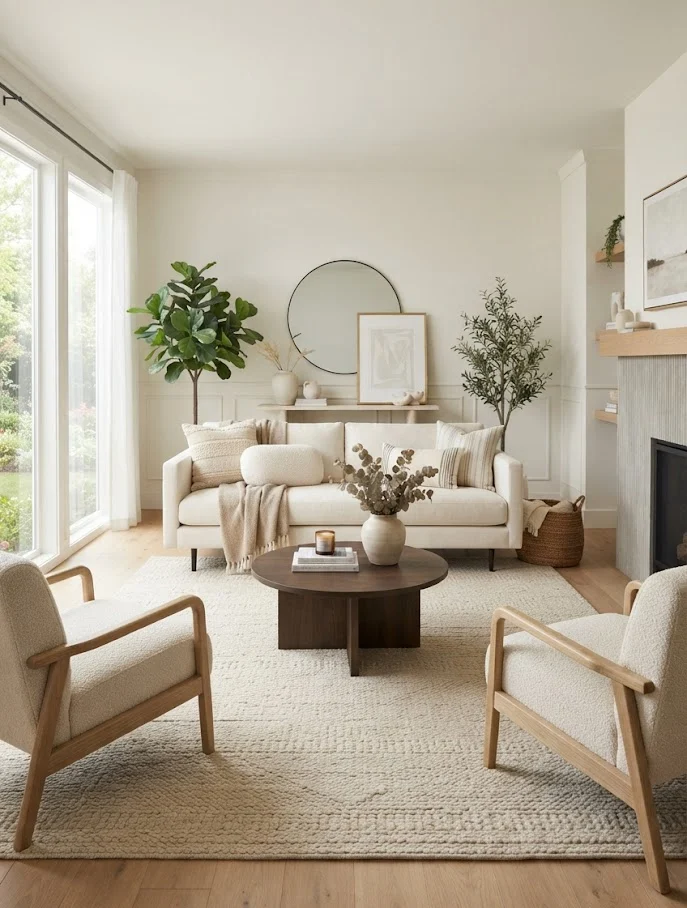
Large neutral rugs remain one of the safest and most timeless choices for dining rooms. Shades like beige, ivory, taupe, greige, and soft gray create a calming foundation that works with almost every furniture style, from rustic farmhouse tables to sleek contemporary dining sets.
Neutral rugs also make decorating easier because they allow lighting fixtures, artwork, and dining chairs to become the focal points. Their understated appearance ensures your dining room remains elegant for years without feeling outdated, making them a smart long-term investment.
2. Bold Patterned Rug
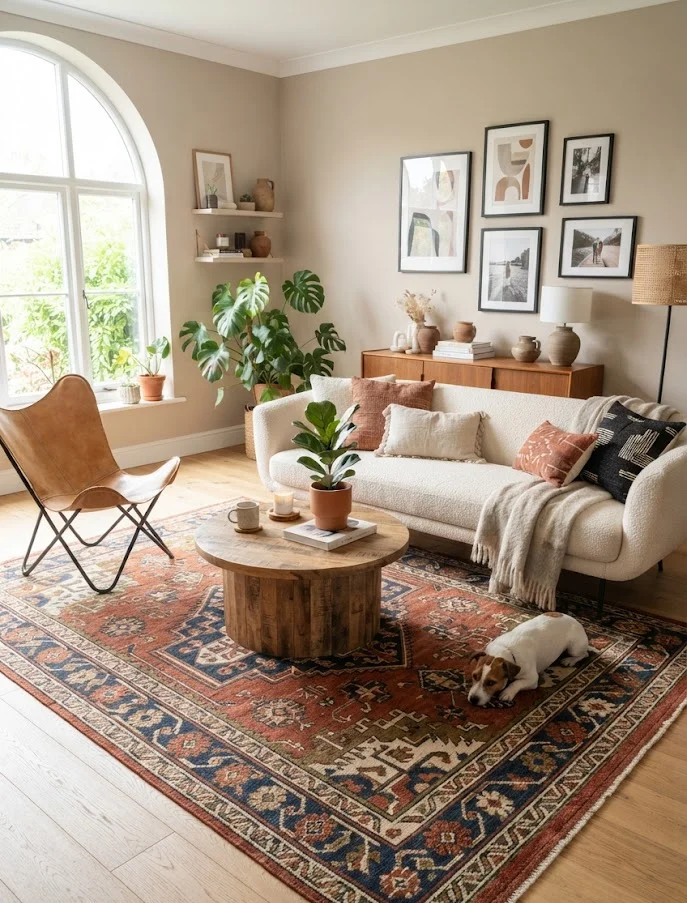
Bold patterned rugs instantly add energy and personality to the dining room. Geometric prints, Moroccan motifs, floral designs, or traditional medallion patterns create visual interest, especially when paired with simple furniture.
Patterns also have a practical advantage—they help disguise crumbs, stains, and everyday wear. When selecting a bold rug, keep surrounding décor relatively simple so the space feels balanced instead of visually overwhelming.
3. Round Rug Under a Round Dining Table
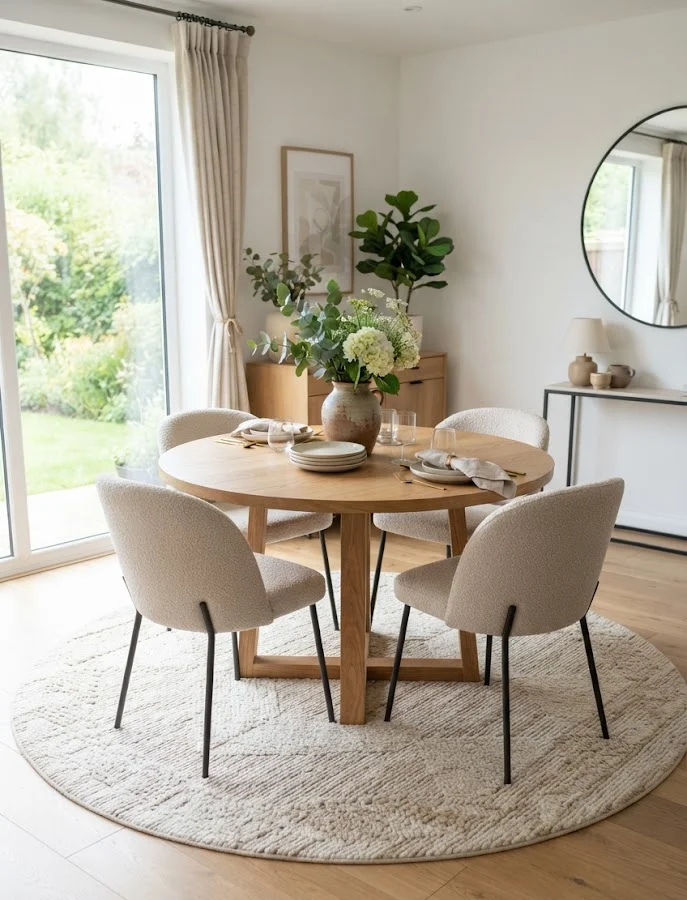
Matching a round rug with a round dining table creates natural symmetry. The repeating circular shape softens the room and encourages better visual flow, making smaller dining spaces feel more inviting.
Choose a rug that’s significantly larger than the table to ensure every chair remains fully supported when pulled out. This combination works particularly well in breakfast nooks, apartments, and compact dining rooms.
4. Vintage Persian Style Rug
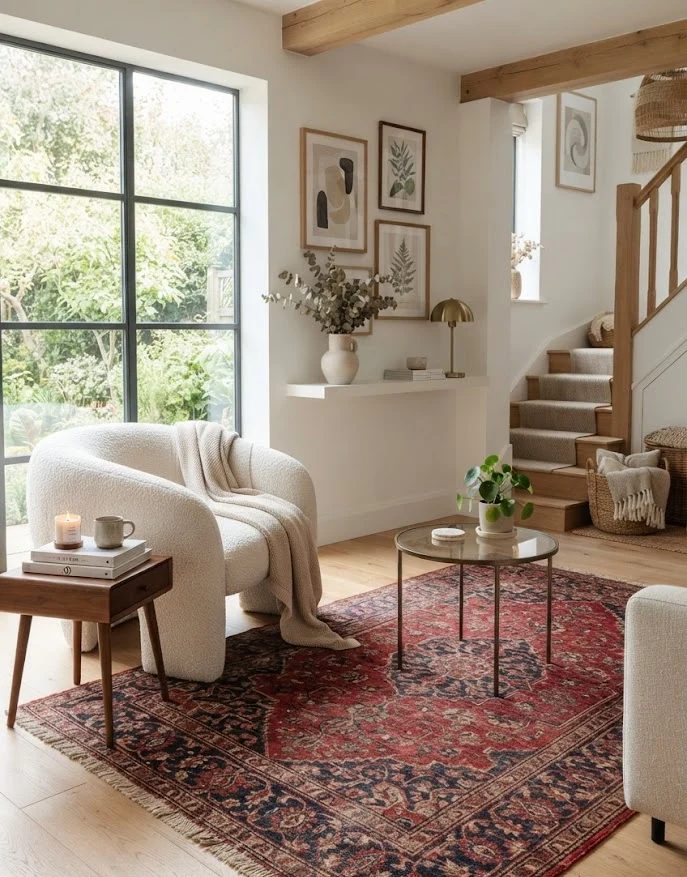
Persian-inspired rugs bring timeless elegance through intricate patterns and rich colors. Their detailed designs introduce warmth, sophistication, and a sense of history that complements both antique and modern dining furniture.
These rugs are especially practical because their layered patterns naturally hide everyday stains and minor spills. Choose faded vintage-style versions for a softer, updated appearance that blends beautifully with contemporary interiors.
5. Natural Jute or Sisal Rug
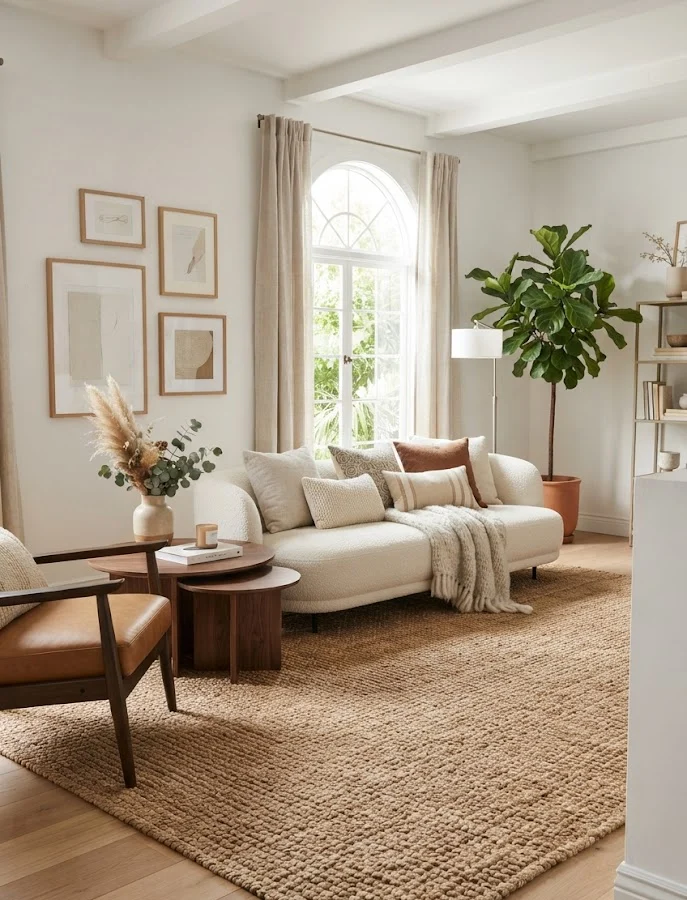
Natural fiber rugs introduce warmth through texture rather than bold color. Jute and sisal create an organic look that pairs beautifully with wood furniture, indoor plants, and neutral décor.
These rugs are highly durable and ideal for busy households. Although they require prompt cleaning after spills, their earthy appearance makes them a favorite choice for coastal, Scandinavian, bohemian, and farmhouse interiors.
6. Modern Geometric Rug
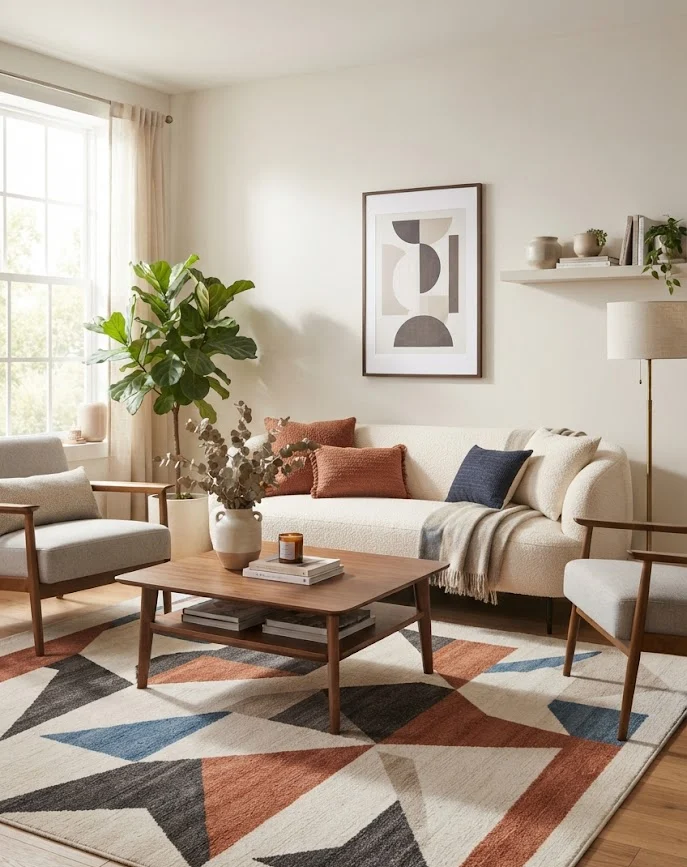
Geometric rugs offer crisp lines and structured patterns that suit contemporary homes. Their clean designs help organize visual space while adding subtle character beneath the dining table.
Neutral geometric prints work particularly well with minimalist interiors, black dining furniture, and sleek lighting fixtures. They create a balanced look without making the room feel busy.
7. Black and White Statement Rug
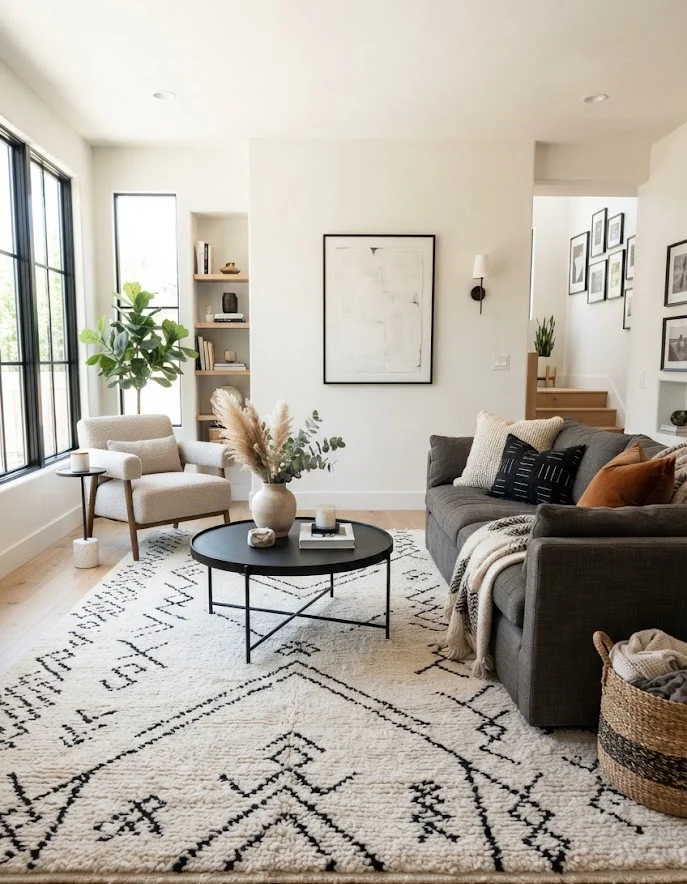
Few rug styles create stronger contrast than black and white designs. These rugs immediately become the room’s focal point while maintaining timeless appeal that won’t quickly go out of style.
To prevent the space from feeling overly dramatic, pair the rug with natural wood furniture, warm lighting, and soft textiles. This creates a comfortable balance between modern sophistication and welcoming warmth.
8. Soft Wool Dining Rug
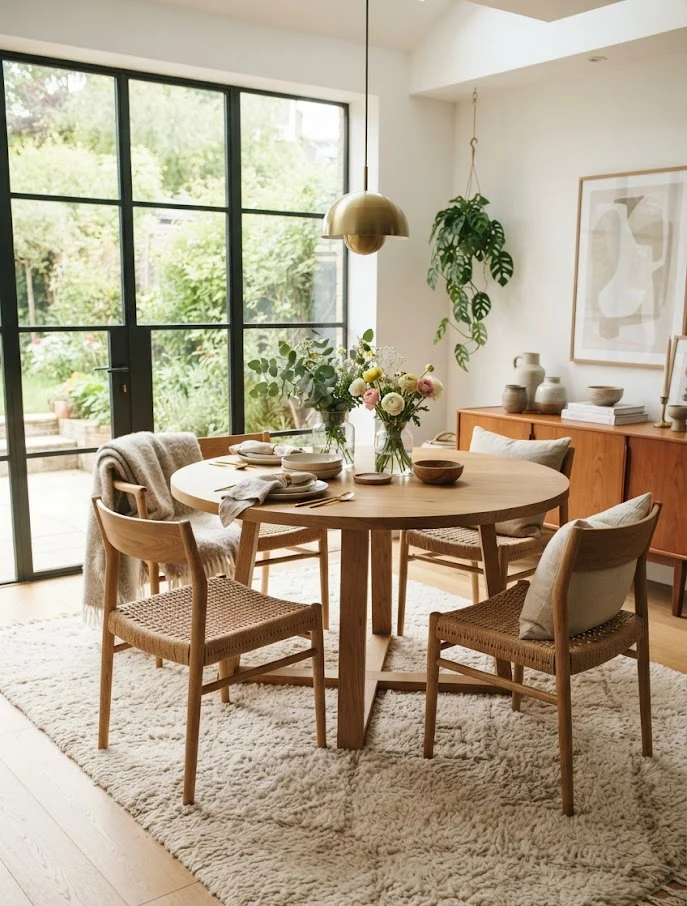
Wool rugs remain one of the highest-quality choices for dining rooms thanks to their durability, softness, and natural stain resistance. They provide excellent insulation and absorb sound, making dining experiences more comfortable.
Choose a low- or medium-pile wool rug to allow chairs to move smoothly. While wool may cost more initially, its longevity often makes it a worthwhile investment for busy family homes.
9. Striped Dining Rug
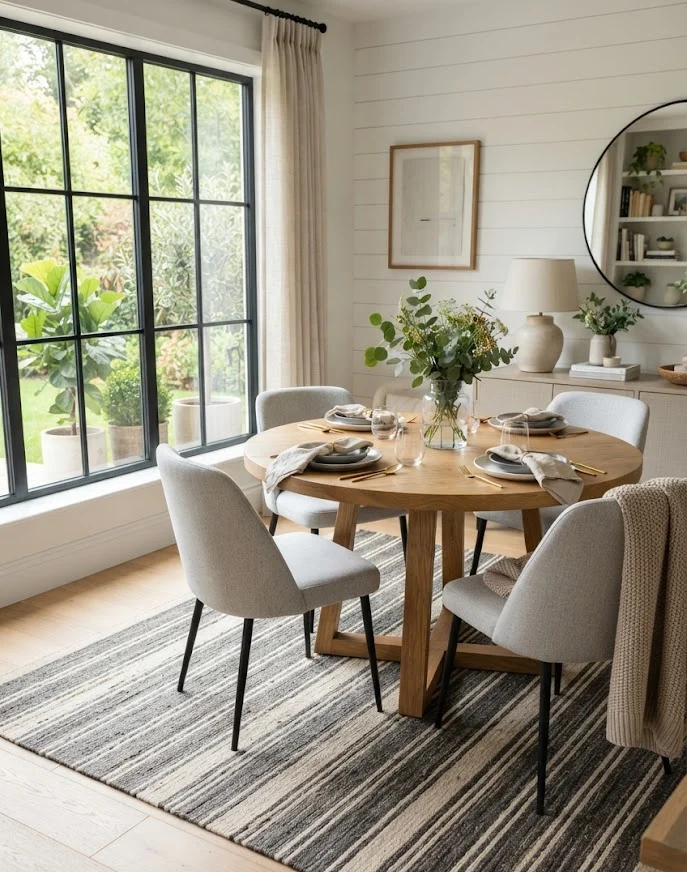
Striped rugs are excellent for altering the perception of space. Horizontal stripes visually widen narrow rooms, while vertical stripes create the illusion of additional length.
Subtle striped designs in neutral colors provide sophistication without overpowering the room. They work particularly well in coastal, transitional, and contemporary interiors where clean lines are emphasized.
10. Washable Dining Room Rug
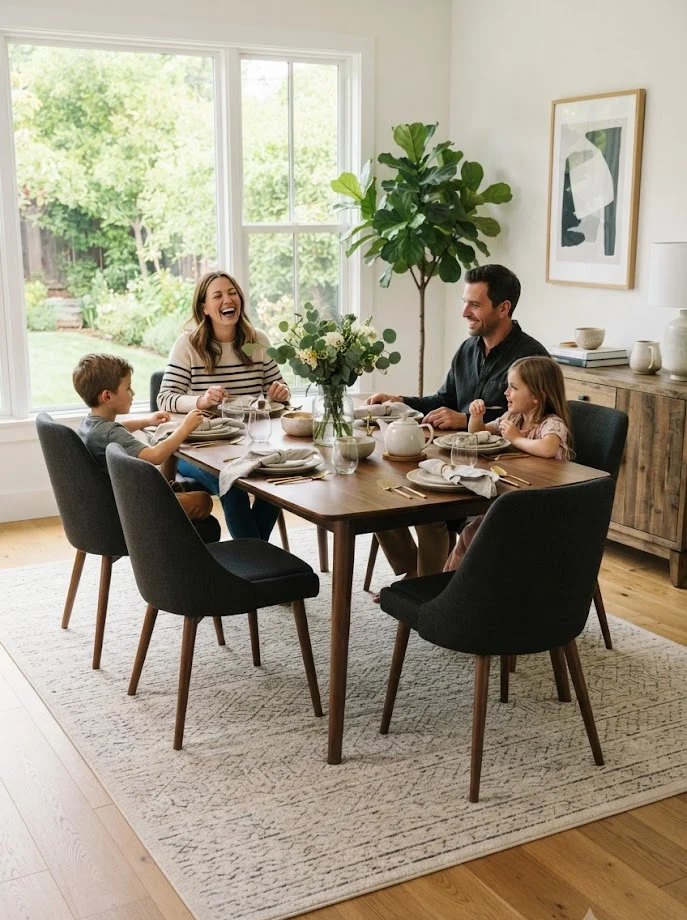
Modern washable rugs have become increasingly stylish, making them ideal for families with children or homes that entertain frequently. They offer peace of mind without sacrificing aesthetics.
Many washable rugs feature stain-resistant fibers, non-slip backing, and attractive designer patterns. They combine convenience with beauty, making everyday dining significantly easier to manage.
11. Layered Rug Design
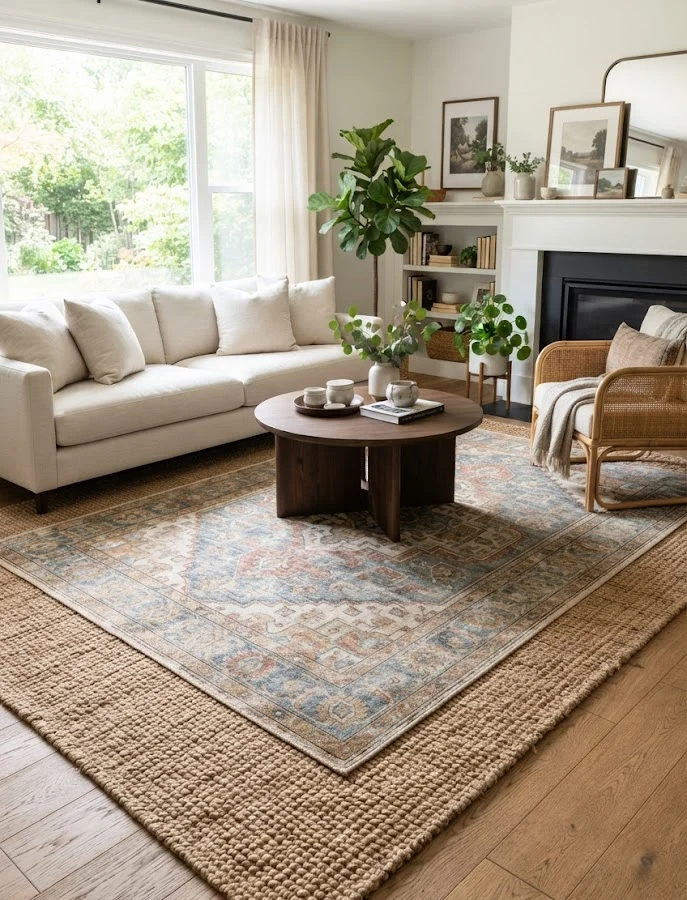
Layering rugs creates additional depth and texture within the dining area. A large neutral base rug paired with a smaller patterned rug introduces dimension while allowing greater design flexibility.
Keep layering subtle to ensure dining chairs still function comfortably. This style works best in eclectic, bohemian, modern rustic, and designer-inspired interiors where texture plays an important role.
Best Rug Materials for Dining Rooms
The material you choose greatly affects durability and maintenance. Wool offers luxury, softness, and excellent longevity. Polypropylene provides stain resistance at an affordable price, while cotton rugs are lightweight and often machine washable.
Natural fibers like jute and sisal bring beautiful texture but require more care around liquids. Flatweave rugs are another excellent option because they’re easy to vacuum, durable, and allow chairs to move effortlessly across the surface.
Dining Rug Size and Placement Guide
Correct sizing is the most important part of choosing a dining rug. The rug should extend at least 24–30 inches beyond every side of the table. This ensures guests can comfortably pull out chairs without catching the rug’s edge.
Center the rug beneath both the dining table and overhead light fixture to maintain symmetry. In open-concept homes, the rug should clearly define the dining zone while maintaining balanced spacing around surrounding furniture.
Common Dining Rug Mistakes to Avoid
One of the biggest mistakes homeowners make is choosing a rug that’s too small. Small rugs make dining areas feel disconnected and cause chairs to wobble whenever they’re moved.
Another common error is selecting thick shag rugs. High-pile rugs trap crumbs, make chairs difficult to slide, and require considerably more maintenance. Always prioritize functionality alongside style for long-term satisfaction.
Dining Room Rug Care and Maintenance
Vacuum your dining rug weekly to remove crumbs and dust before they settle into the fibers. Clean spills immediately using manufacturer-approved cleaning methods to prevent permanent staining.
Rotate the rug every six months to ensure even wear, especially in busy households. Using rug pads underneath also increases comfort, prevents slipping, and extends the rug’s lifespan.
Frequently Asked Questions
What size rug works best under a dining table?
Choose a rug that extends 24–30 inches beyond all sides of the table so chairs remain fully supported when pulled out.
Which rug material is easiest to clean?
Polypropylene and washable synthetic rugs are generally the easiest to maintain because they resist stains and moisture.
Can I use a high-pile rug under my dining table?
High-pile rugs are not recommended since they make chair movement difficult and trap food debris more easily.
Should the rug match the shape of the dining table?
In most cases, yes. Round tables look best with round rugs, while rectangular tables pair naturally with rectangular rugs.
Are patterned rugs better than solid rugs?
Patterned rugs help hide stains and wear, making them ideal for busy homes. Solid rugs create a calmer, more minimalist appearance.
Do I need a rug pad beneath the dining rug?
Yes. A quality rug pad prevents slipping, protects flooring, increases comfort, and helps the rug last longer.
Conclusion
A well-chosen dining table rug transforms an ordinary dining area into a warm, welcoming, and visually balanced space. Beyond adding style, the right rug protects your floors, reduces noise, improves comfort, and defines the dining zone with elegance.
Whether you love timeless neutral rugs, bold modern patterns, vintage Persian designs, or easy-care washable options, success comes down to selecting the proper size, durable material, and thoughtful placement. By following the ideas and expert tips in this guide, you can create a dining room that feels cohesive, functional, and beautifully designed for everyday living and special gatherings alike.