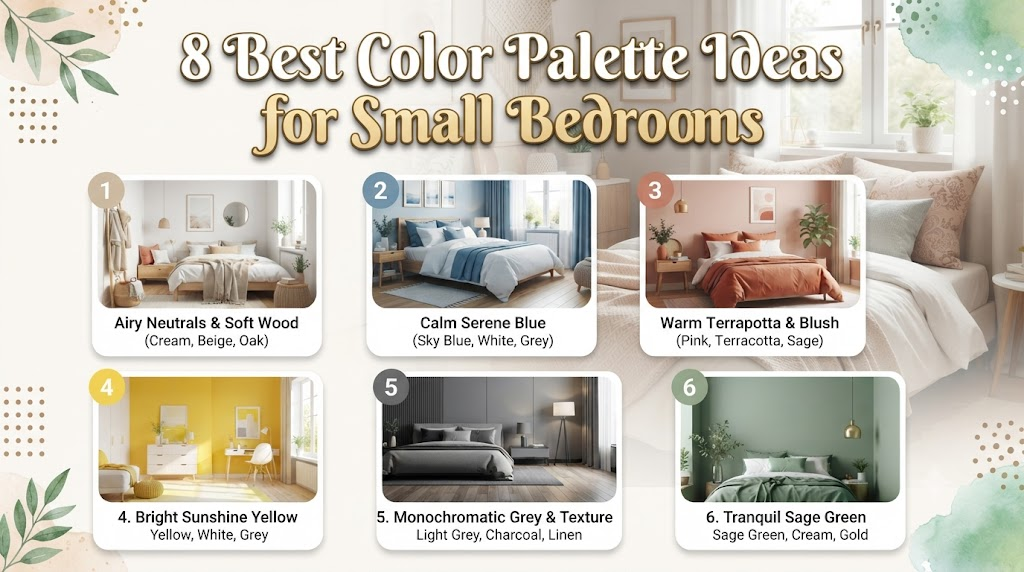
8 Best Color Palette Ideas for Small Bedrooms
Choosing the right color palette can completely change the way a small bedroom looks and feels. Even if your room has limited square footage, the right combination of colors can make it appear brighter, more open, and far more inviting. Paint isn’t just about decoration—it influences mood, affects how spacious a room feels, and ties every design element together.
Many people believe small bedrooms should only use plain white walls, but that’s far from true. Soft greens, warm neutrals, masculine style, muted blues, and gentle earth tones can all create the illusion of extra space while adding warmth and personality. The secret is selecting colors that complement your room’s lighting, furniture, and overall style.
Whether you’re decorating a tiny apartment bedroom, a cozy guest room, or a compact master bedroom, these carefully selected color palettes will help you achieve a balanced and stylish look. Along with each palette, you’ll find decorating tips, color combinations, and practical advice to make your bedroom feel comfortable without looking overcrowded.
Why Choosing the Right Color Palette Matters
A thoughtfully chosen color palette does much more than improve appearance. It changes how large your bedroom feels, affects natural light, and creates the atmosphere you experience every day. In small bedrooms, every wall and piece of furniture contributes to the overall visual flow, making color selection especially important.
Light colors naturally reflect more light, helping walls appear farther apart. Coordinating your walls, bedding, curtains, and furniture within a balanced color scheme also reduces visual clutter, making the room feel cleaner and more spacious.
Benefits of a Good Bedroom Color Palette
- Makes small rooms appear larger.
- Reflects more natural light.
- Creates a calm and relaxing atmosphere.
- Makes decorating easier.
- Improves visual balance.
- Gives the room a professionally designed appearance.
Understanding Color Psychology in Small Bedrooms
Colors influence both our emotions and our perception of space. Cool shades such as blue and green often create a peaceful environment, making them ideal for bedrooms where relaxation is the priority. Warm neutrals like beige, cream, and soft taupe add comfort without making the room feel heavy.
Bright whites reflect the most light, but using only white can sometimes make a bedroom feel cold or sterile. Mixing whites with warmer shades, natural wood, and textured fabrics creates a softer, more welcoming space.
When selecting colors, think about how you want your bedroom to feel. If you want a peaceful retreat, choose calming hues. If you prefer a brighter and more energetic space, introduce subtle accent colors while keeping the main palette light.
Popular Bedroom Color Moods
| Color Family | Creates This Feeling |
| Soft Blue | Calm and relaxing |
| Sage Green | Fresh and peaceful |
| Warm Beige | Cozy and inviting |
| White | Bright and spacious |
| Dusty Pink | Soft and elegant |
| Light Gray | Modern and balanced |
1. Soft Sage Green and Warm White
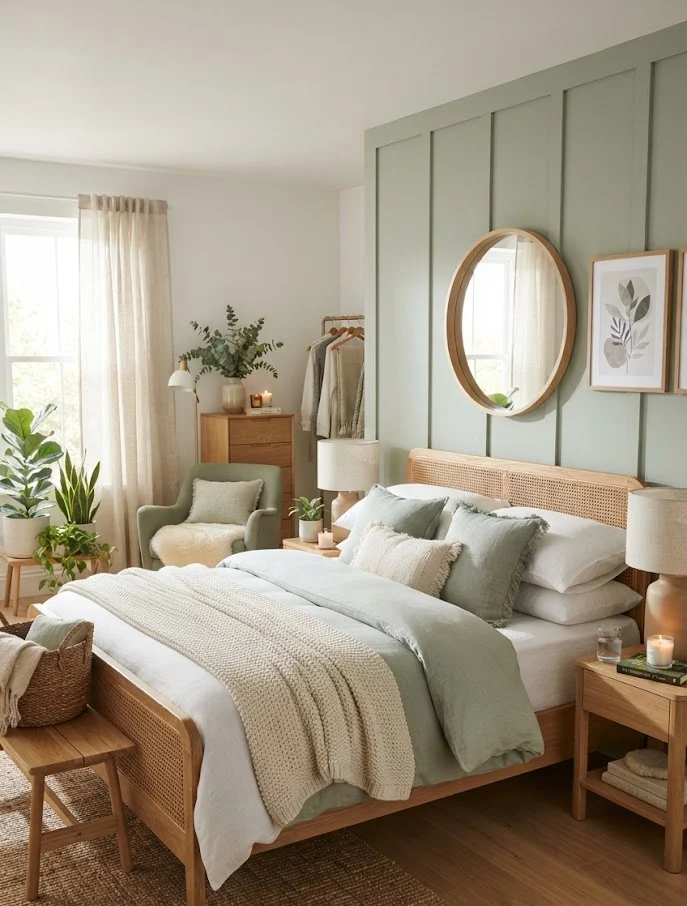
Soft sage green has become one of the most popular bedroom colors because it brings a peaceful, nature-inspired feeling into the home. When paired with warm white walls or trim, it creates a bright yet cozy atmosphere that’s perfect for small spaces.
This palette works exceptionally well in bedrooms with natural light because the soft green reflects daylight without feeling overpowering. Instead of making the room appear smaller, it adds subtle depth while maintaining an airy appearance.
Complete the look with light oak furniture, cream bedding, woven baskets, and indoor plants for a calming bedroom that feels fresh throughout every season.
Best Accent Colors
- Warm White
- Natural Oak
- Beige
- Linen
- Olive Green
Perfect For: Scandinavian, Modern, Japandi, Cottage bedrooms
2. Warm Beige and Cream Layers
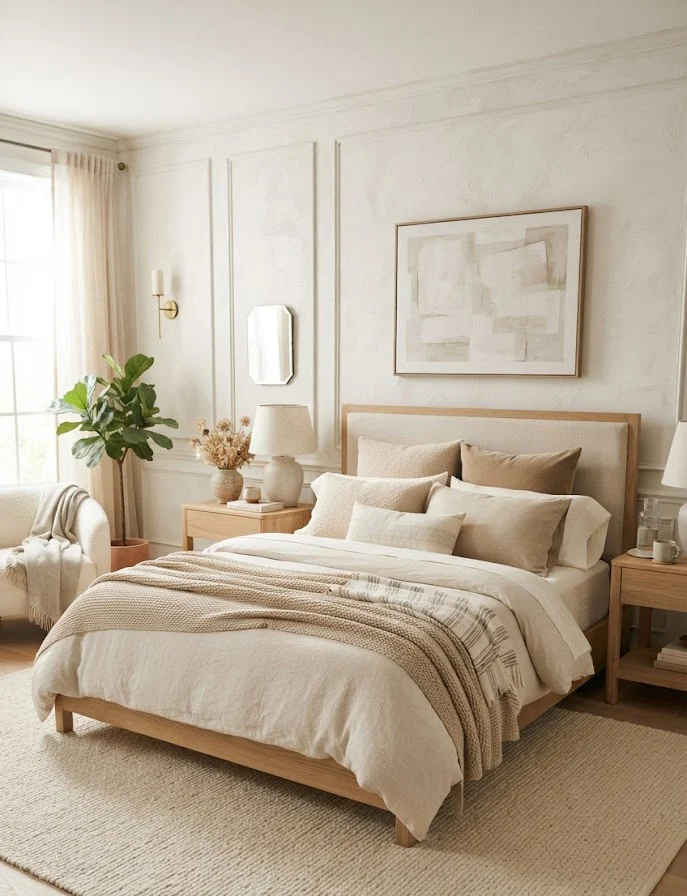
Warm beige remains one of the safest choices for small bedrooms because it reflects light while creating a cozy atmosphere. Unlike bright white, beige adds warmth that makes the room feel welcoming throughout the year.
Layering several shades of cream, ivory, sand, and light taupe creates visual interest without introducing strong contrasts. This technique helps the room feel larger because your eyes move smoothly across the space rather than stopping at bold color changes.
Finish the room with textured throws, linen curtains, and wooden furniture to create a timeless bedroom that never goes out of style.
Best Accent Colors
- Ivory
- Soft Brown
- Camel
- Light Gray
- White
Perfect For: Traditional, Transitional, Modern Farmhouse bedrooms
3. Sky Blue and Crisp White
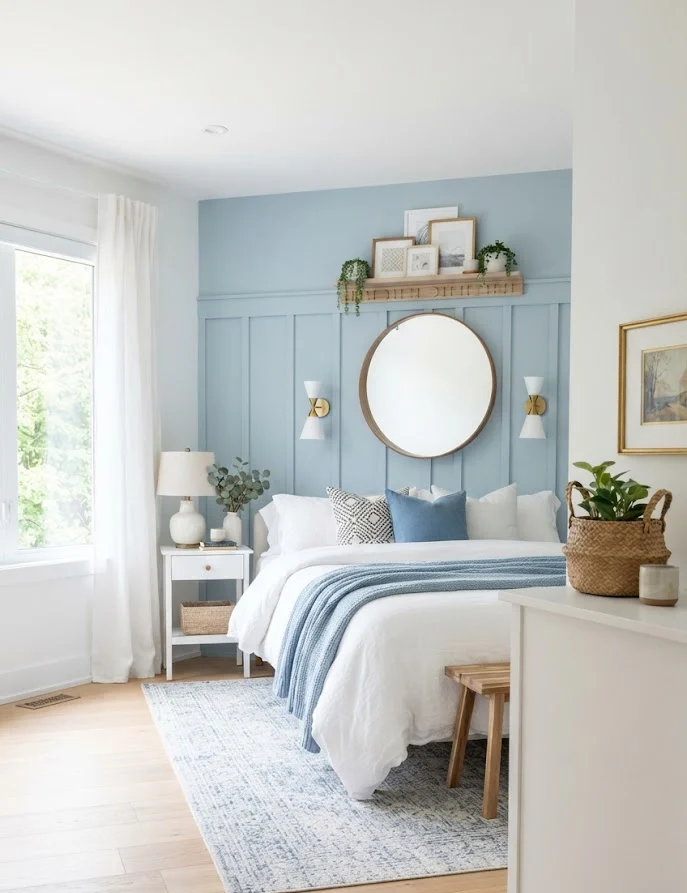
Sky blue is an excellent choice for making a compact bedroom feel more open. The cool undertones create the illusion of distance, making walls appear farther apart while giving the room a fresh and relaxing atmosphere.
Pair sky blue walls with crisp white bedding, white trim, and light-colored curtains to maximize brightness. Add natural textures like jute rugs and wooden nightstands to prevent the room from feeling overly cool.
This palette is especially effective in bedrooms that receive plenty of morning sunlight, as the natural light enhances the soft blue tones and creates an airy, uplifting environment.
Best Accent Colors
- White
- Light Gray
- Natural Wood
- Navy Blue
- Soft Silver
Perfect For: Coastal, Contemporary, Minimalist bedrooms
4. Dusty Rose and Soft Gray
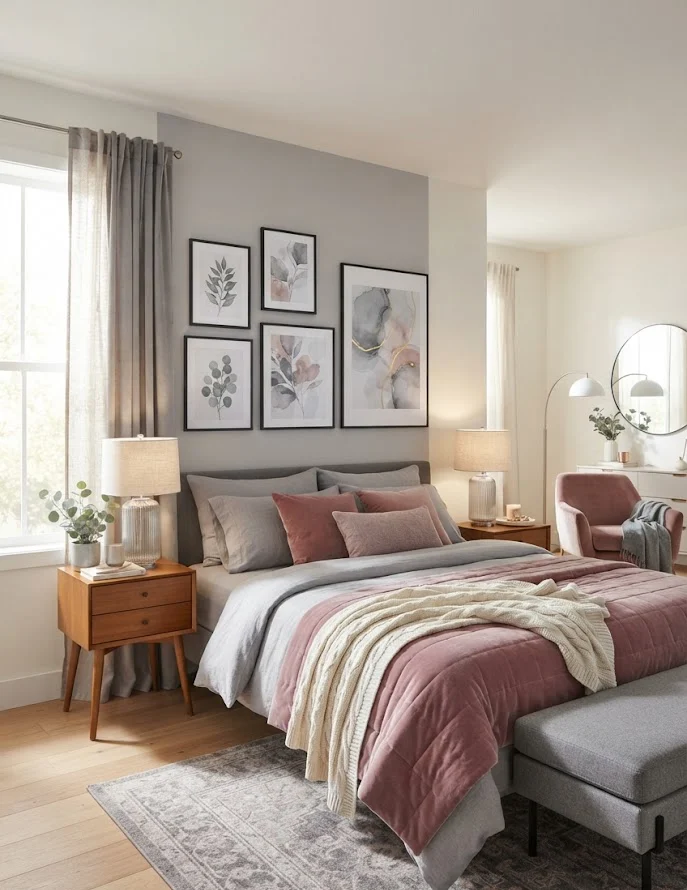
Dusty rose is a soft, muted pink that adds warmth and elegance without making a small bedroom feel overwhelming. When paired with soft gray, it creates a balanced palette that feels modern, cozy, and sophisticated. Unlike bright pink shades, dusty rose has earthy undertones that blend beautifully with neutral décor.
Paint the walls in a light dusty rose or use it as an accent color behind the bed. Pair it with soft gray bedding, white trim, and light wood furniture to keep the room bright and spacious. Adding linen curtains and textured cushions enhances the cozy feel without cluttering the space.
This palette works well in bedrooms that receive moderate natural light and creates a relaxing atmosphere that feels both stylish and inviting.
Best Accent Colors
- White
- Soft Gray
- Gold
- Light Oak
- Beige
Perfect For: Modern, Scandinavian, Feminine, Contemporary bedrooms
5. Greige and Natural Wood
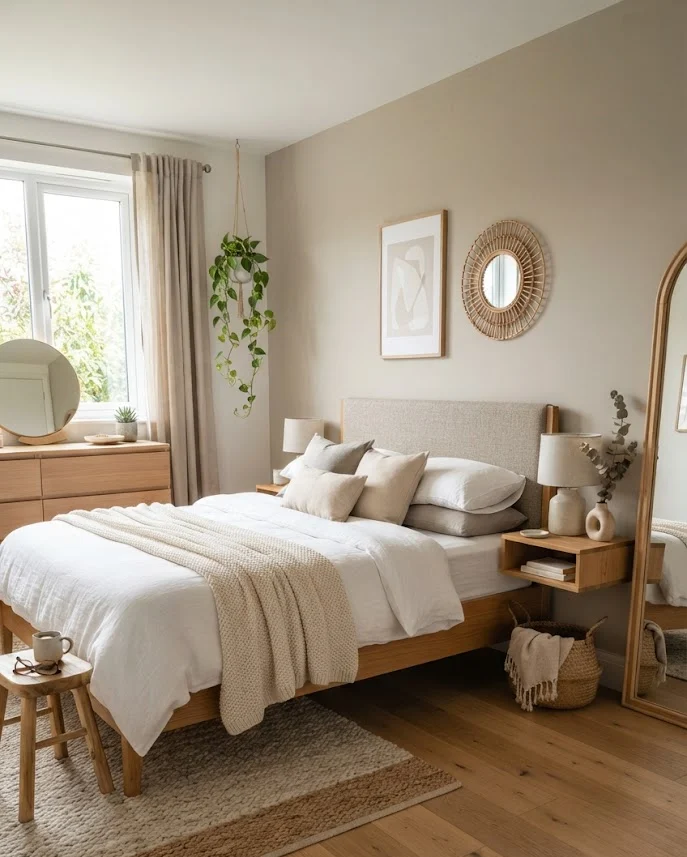
Greige—a blend of gray and beige—has become one of the most popular neutral colors for modern interiors. It combines the warmth of beige with the clean look of gray, making it an excellent choice for small bedrooms. Greige creates a calm backdrop that complements almost any decorating style.
Pair greige walls with natural oak or walnut furniture to add warmth and texture. White bedding, woven baskets, and indoor plants help soften the space while maintaining an open and airy appearance. The combination of neutral walls and natural wood prevents the room from feeling cold or flat.
Because greige adapts well to different lighting conditions, it’s a practical option for bedrooms with both natural and artificial light.
Best Accent Colors
- White
- Oak
- Black
- Olive Green
- Linen
Perfect For: Japandi, Modern Farmhouse, Minimalist, Transitional bedrooms
6. Muted Terracotta and Cream
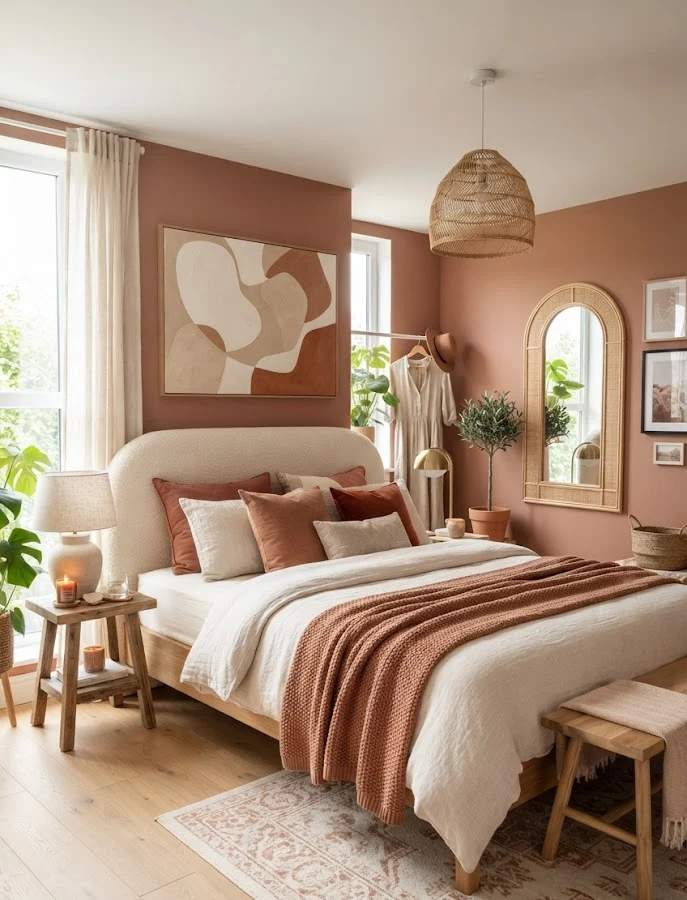
Muted terracotta introduces warmth and personality while remaining soft enough for compact spaces. Unlike darker orange tones, muted terracotta feels earthy and calming, making it ideal for creating a welcoming bedroom.
Balance the richness of terracotta with cream walls, white bedding, and light wood furniture. This combination prevents the room from feeling too dark while adding depth and character. Natural textures like rattan lighting, woven rugs, and ceramic accessories complete the look beautifully.
If you prefer a subtle approach, use terracotta for bedding, throw pillows, or artwork while keeping the walls cream. This creates visual interest without overwhelming a small room.
Best Accent Colors
- Cream
- White
- Sand
- Walnut
- Olive Green
Perfect For: Mediterranean, Bohemian, Rustic, Earthy interiors
7. Soft Lavender and White
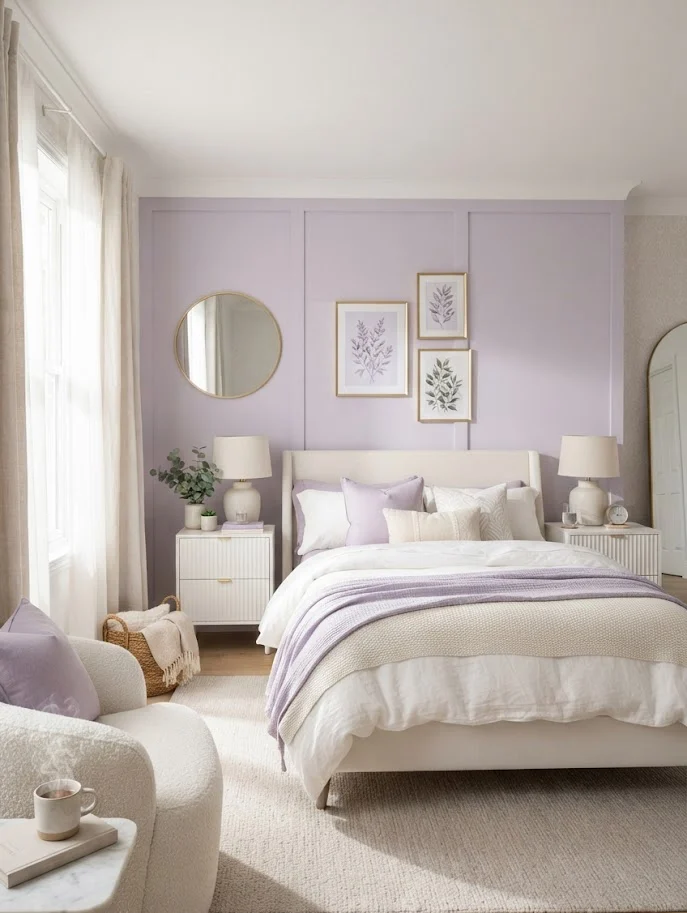
Soft lavender is a gentle color that creates a peaceful and relaxing bedroom without making the room feel dark. Its cool undertones help open up a small space while adding a subtle touch of color. Unlike bold purple shades, lavender feels light, elegant, and timeless.
Pair lavender walls with crisp white bedding, white trim, and light-colored furniture for a fresh and airy look. Add silver accents, soft gray cushions, or fresh flowers to enhance the calming atmosphere. This combination works especially well in bedrooms designed for rest and relaxation.
If you don’t want to paint every wall, use lavender as an accent wall behind the bed while keeping the remaining walls white. This creates depth without overwhelming the room.
Best Accent Colors
- White
- Soft Gray
- Silver
- Light Oak
- Pale Blue
Perfect For: Contemporary, Cottage, Minimalist, Romantic bedrooms
8. Monochromatic White and Light Gray
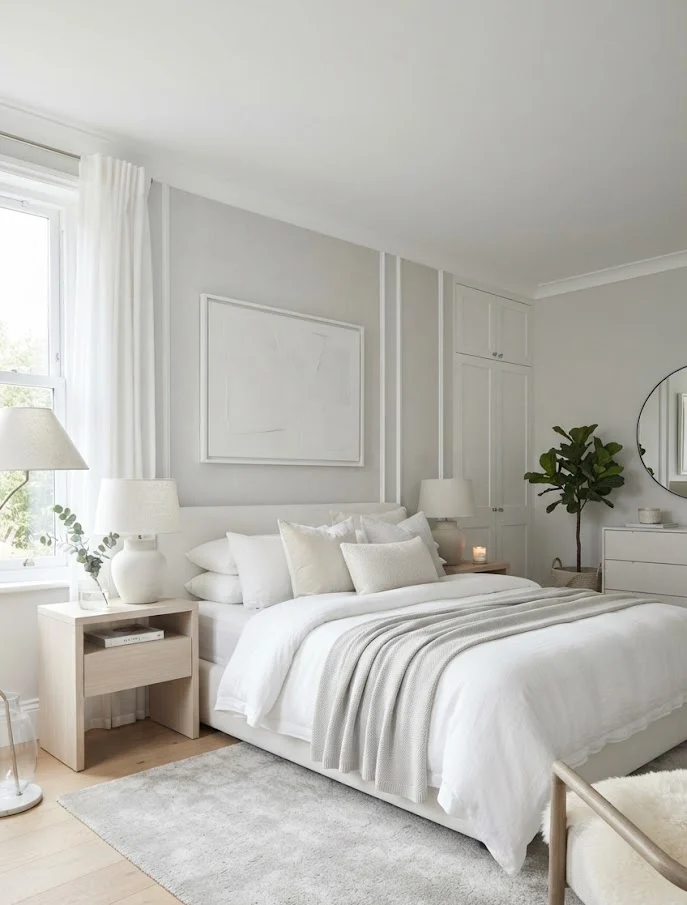
A monochromatic palette uses different shades of the same color family to create depth while maintaining a clean and uncluttered appearance. White and light gray are a classic combination that makes even the smallest bedrooms feel larger and brighter.
Instead of relying on bold colors, add interest through layered textures. White bedding, gray throws, knitted blankets, upholstered headboards, and plush rugs create warmth while keeping the overall design simple and elegant.
To prevent the room from feeling too plain, introduce natural wood furniture, black picture frames, or indoor plants. These small accents add contrast without disrupting the soft palette.
Best Accent Colors
- Charcoal Gray
- Black
- Natural Wood
- Green Plants
- Beige
Perfect For: Minimalist, Scandinavian, Modern, Luxury bedrooms
Common Color Mistakes to Avoid
.
Even beautiful paint colors can make a room feel smaller if they’re used incorrectly. Avoid using too many bold shades in one space, as this creates visual clutter and makes the room feel busy.
Another common mistake is ignoring natural light. A color that looks perfect in a store may appear much darker or cooler in your bedroom. Always test paint samples on different walls and observe them throughout the day before making a final decision.
Mistakes to Avoid
- Choosing colors without testing samples.
- Using too many dark shades.
- Mixing too many bold accent colors.
- Ignoring your room’s natural lighting.
- Using heavy, dark curtains with light walls.
- Forgetting to coordinate furniture and décor.
Simple Styling Tips for Small Bedrooms
The right styling choices help your color palette stand out while making the bedroom feel more spacious. Choose furniture with clean lines and avoid overcrowding the room with unnecessary decorations.
Use mirrors to reflect natural light, add layered bedding for texture, and introduce greenery for a fresh touch. Keeping accessories simple allows the color palette to remain the main focus of the room.
Easy Decorating Ideas
- Choose light-colored bedding.
- Hang mirrors opposite windows.
- Add woven baskets for storage.
- Keep bedside tables clutter-free.
- Use floating shelves to save floor space.
- Add one or two indoor plants for freshness.
How to Test Paint Colors Before You Commit
Testing paint before decorating can save both time and money. Paint a large sample on two or three different walls instead of relying on tiny paint chips. This gives you a better idea of how the color changes throughout the day.
Observe the sample in natural daylight, evening light, and under your bedroom lamps. Also compare it with your flooring, curtains, and furniture to make sure everything works together. Living with the sample for a few days helps you make a confident decision before painting the entire room.
Frequently Asked Questions
What is the best color for making a small bedroom look bigger?
Light shades such as warm white, soft beige, sage green, and sky blue reflect more light and create the illusion of a larger, more open room.
Can I use dark colors in a small bedroom?
Yes. Dark colors can work as accent walls or in small decorative details. Balance them with lighter walls, bedding, and furniture to keep the room feeling open.
Which paint finish is best for bedroom walls?
Matte and eggshell finishes are the most popular choices because they create a soft appearance while hiding minor wall imperfections.
Should the ceiling be lighter than the walls?
Yes. A lighter ceiling helps draw the eye upward, making the room appear taller and more spacious.
How many colors should a small bedroom have?
For the best results, stick to two or three main colors with one subtle accent color. This creates a cohesive and uncluttered design.
How do I brighten a bedroom with very little natural light?
Use high light-reflecting paint colors, install warm white lighting, add mirrors, and choose light-colored curtains and bedding to maximize brightness.
Conclusion
The right color palette can completely transform a small bedroom, making it feel brighter, larger, and more comfortable without changing the room’s layout. Whether you love calming sage green, timeless beige, airy sky blue, elegant dusty rose, or warm terracotta, choosing colors that complement your lighting and furniture is the key to creating a balanced space. Soft, coordinated palettes also make decorating easier by allowing your furniture, textiles, and accessories to blend together naturally.
Before you start painting, always test your favorite shades in your own room and observe them throughout the day. Combine your chosen palette with layered lighting, natural textures, mirrors, and simple décor to maximize the feeling of space. With these 8 best color palette ideas for small bedrooms, you can create a room that feels stylish, welcoming, and perfectly suited to your personal taste while making every square foot feel more open and inviting.