
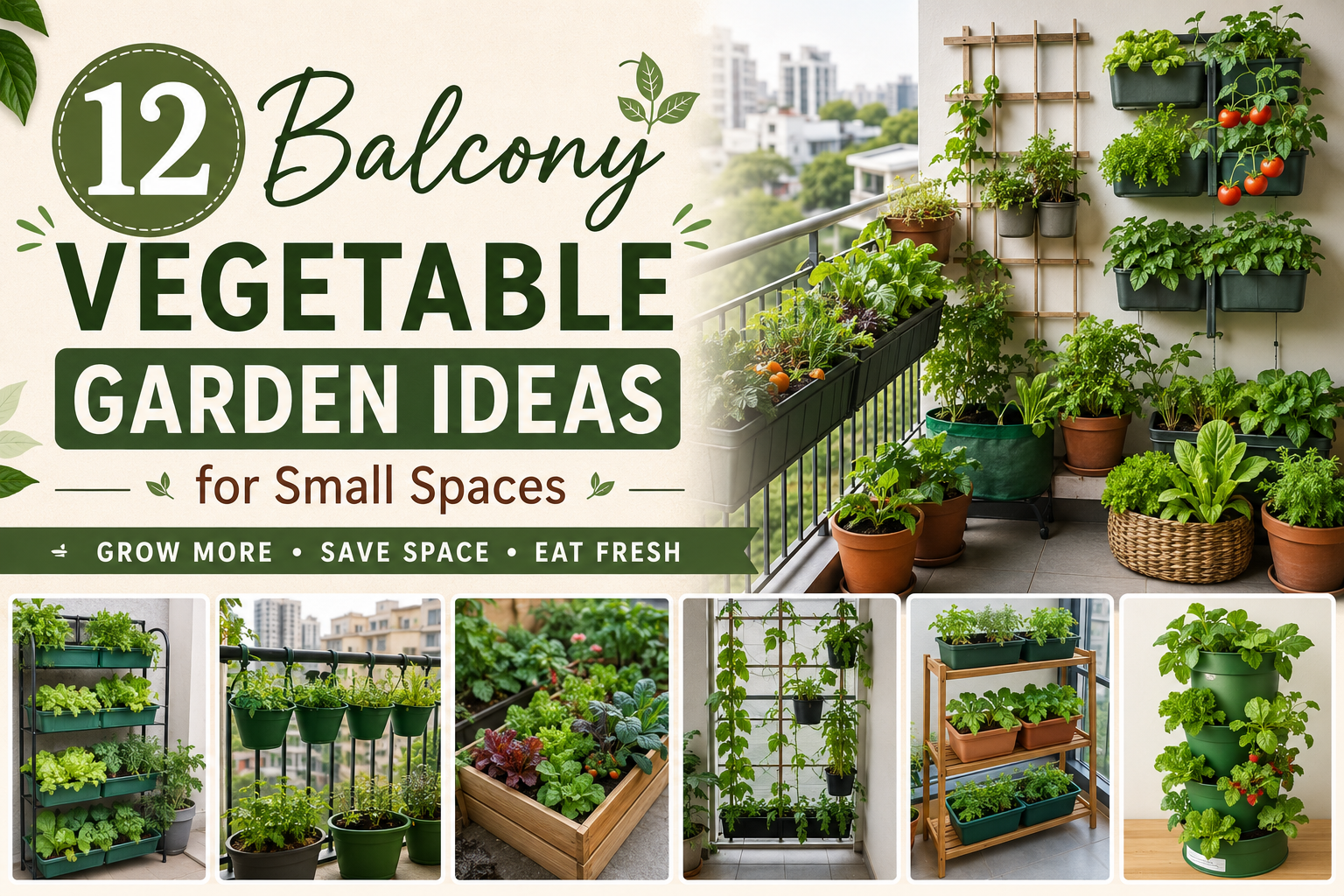
12 Balcony Vegetable Garden Ideas for Small Spaces
Growing your own vegetables doesn’t require a large backyard. With a little planning, even the smallest apartment balcony can become a productive mini garden that supplies fresh herbs, leafy greens, tomatoes, peppers, and other vegetables throughout the growing season.
A balcony vegetable garden is more than just a way to save money on groceries. It allows you to enjoy healthier food, reduce waste, spend time outdoors, and create a peaceful green space right outside your door. Whether your balcony receives full sun or partial shade, there are smart gardening methods that help maximize every inch of available space.
The secret is choosing the right containers, arranging plants efficiently, providing healthy soil, and understanding each vegetable’s sunlight and watering needs. You don’t need expensive equipment or years of gardening experience to get started.
In this guide, you’ll discover practical balcony vegetable garden ideas that work in real homes. From vertical gardens and hanging baskets to composting and natural pest control, these tips will help you grow a thriving vegetable garden regardless of your balcony size.
How to Start a Balcony Vegetable Garden Successfully
Before buying seeds or plants, spend a few days observing your balcony. Notice how many hours of sunlight it receives, where shadows fall throughout the day, and how much space you actually have available. Most vegetables need at least 5–6 hours of sunlight, while leafy greens can tolerate partial shade.
Next, think about your layout. Reserve sunny spots for fruiting vegetables like tomatoes, peppers, and eggplants, while placing herbs and leafy greens in areas with softer afternoon light. Keeping a clear walkway also makes watering, harvesting, and maintenance much easier.
Start with only a few vegetables instead of filling every corner immediately. As your confidence grows, you can expand your garden each season without feeling overwhelmed.
Beginner Essentials
- Choose containers with drainage holes.
- Use high-quality potting mix.
- Water consistently.
- Feed plants with organic fertilizer.
- Grow vegetables suitable for containers.
- Avoid overcrowding.
1. Build a Vertical Balcony Vegetable Garden
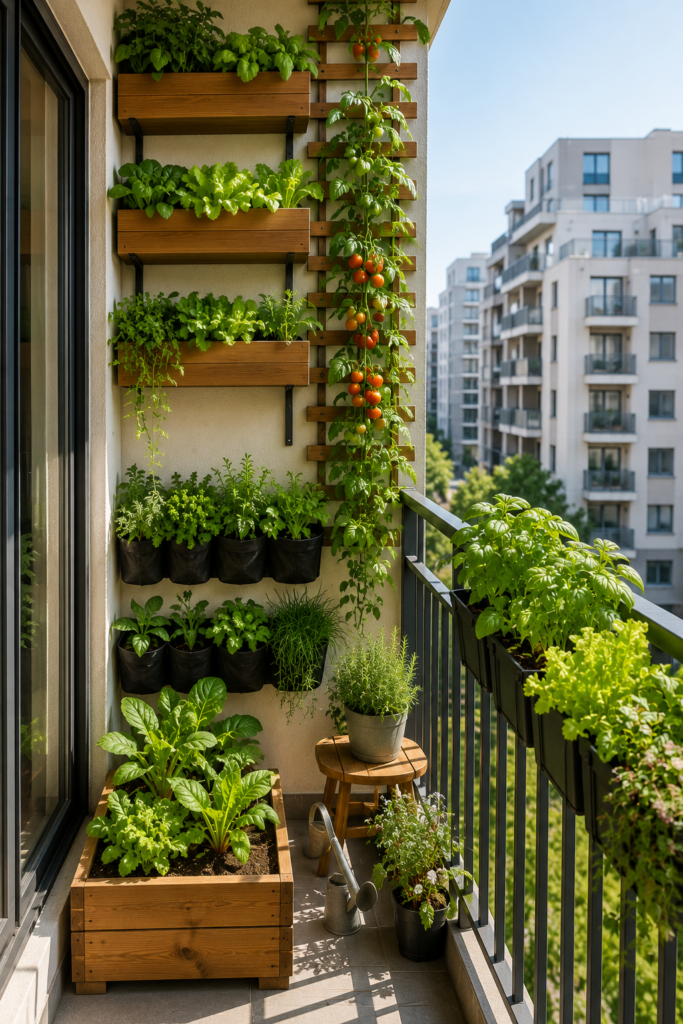
Vertical gardening is one of the smartest ways to maximize a small balcony. Instead of using valuable floor space, you can grow vegetables upward using shelves, trellises, ladder planters, wall-mounted pockets, or hanging frames. This allows you to grow significantly more food in the same area.
Leafy greens such as lettuce, spinach, kale, and herbs perform exceptionally well in vertical systems because they require shallow soil and regular harvesting. Climbing vegetables like cucumbers, beans, and peas can also grow beautifully when supported by sturdy trellises.
Besides increasing planting space, vertical gardens improve airflow around plants, helping reduce fungal diseases and pest problems. They also make harvesting easier because vegetables remain at comfortable working heights.
Best Vegetables for Vertical Gardening
Lettuce
Quick-growing and ideal for wall planters.
Spinach
Requires little space and produces multiple harvests.
Herbs
Basil, parsley, mint, oregano, and cilantro thrive vertically.
Climbing Beans
Grow upward using simple bamboo supports.
Vertical Gardening Tips
- Secure shelves firmly to walls.
- Avoid placing heavy pots on weak brackets.
- Keep taller plants at the back.
- Water upper containers carefully to prevent dripping.
2. Use Containers and Grow Bags for Flexibility
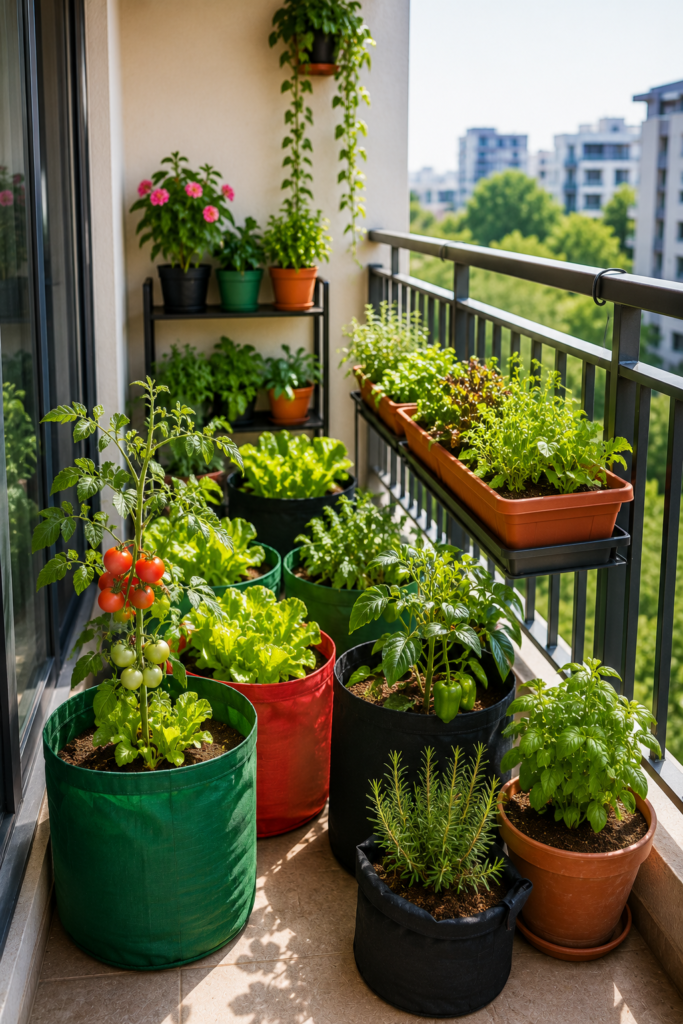
Containers are the foundation of almost every successful balcony vegetable garden. They allow you to move plants whenever sunlight changes throughout the year and make maintenance much easier than planting directly into permanent beds.
Grow bags are especially popular because they improve root aeration, prevent root circling, and drain excess water efficiently. Clay pots also work well because they naturally regulate soil moisture, although they dry out slightly faster during hot weather.
Different vegetables require different container depths. Deep-rooted crops like tomatoes, peppers, carrots, and radishes need larger containers, while herbs and leafy greens grow perfectly in shallow planters.
Recommended Containers
Grow Bags
Lightweight, breathable, and easy to store.
Clay Pots
Classic appearance with excellent drainage.
Plastic Containers
They are affordable, lightweight, and retain moisture longer.
Wooden Planters
Perfect for creating an attractive balcony garden.
Match Containers to Vegetables
- Tomatoes: 5-gallon container minimum
- Peppers: Medium pots
- Lettuce: Shallow trays
- Herbs: Small containers
- Carrots: Deep grow bags
3. Design a Space-Saving Garden Layout
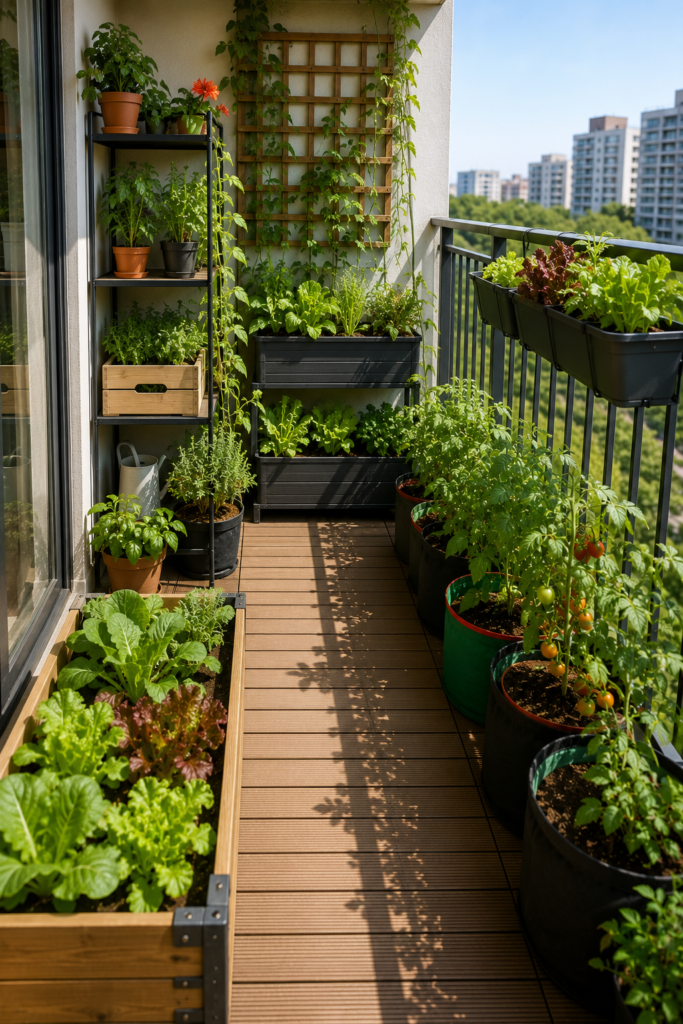
A well-planned layout makes a balcony garden easier to manage while allowing every plant to receive adequate sunlight. Instead of placing containers randomly, divide your balcony into dedicated growing zones based on plant size and sunlight requirements.
Place taller vegetables like tomatoes, beans, and cucumbers against walls or railings where they won’t block sunlight from shorter crops. Medium-height vegetables can occupy the middle, while herbs and leafy greens remain easily accessible at the front.
Maintaining open walking space is equally important. Crowded balconies become difficult to water, prune, and harvest, while proper spacing improves airflow and reduces disease problems.
Smart Layout Ideas
Sunny Zone
Grow tomatoes, peppers, eggplants, and cucumbers.
Partial Shade Zone
Perfect for spinach, lettuce, kale, and herbs.
Vertical Wall
Install shelves or hanging planters.
Balcony Railing
Use railing planters for herbs and flowers.
Layout Benefits
- Better airflow.
- Easier maintenance.
- Improved sunlight exposure.
- Higher vegetable production.
- Cleaner appearance.
4. Grow Vegetables in Hanging Baskets
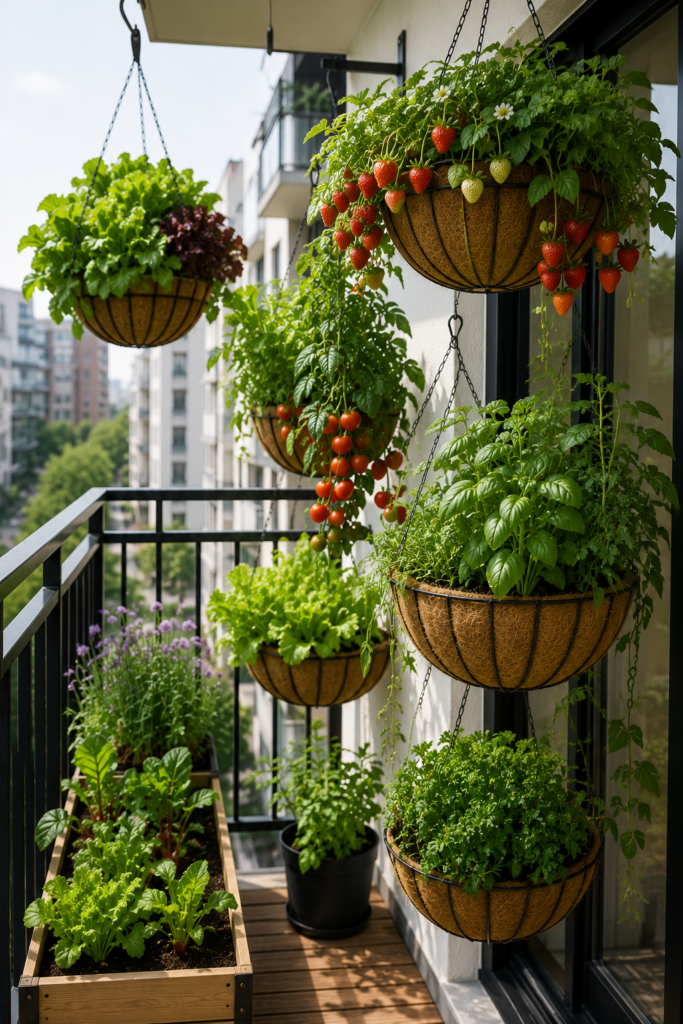
Hanging baskets provide additional growing space without taking up valuable floor area. They’re ideal for apartment balconies where every square foot matters. By utilizing ceilings, beams, hooks, or balcony railings, you can significantly expand your growing capacity.
Herbs, lettuce, strawberries, cherry tomatoes, and trailing vegetables all perform well in hanging baskets because they have relatively shallow root systems and naturally cascade over container edges. These baskets also create beautiful layers that make the balcony feel lush and inviting.
Always use strong hooks, weather-resistant chains, and lightweight potting mixes to reduce stress on your balcony structure. Regular watering is especially important because hanging baskets dry out faster than containers placed on the floor.
Best Plants for Hanging Baskets
Mint
Fast-growing and perfect for elevated containers.
Coriander
Compact and productive throughout the season.
Lettuce
Easy to harvest from eye level.
Cherry Tomatoes
Produce abundant fruit while cascading naturally.
Hanging Basket Tips
- Water more frequently during summer.
- Install secure mounting hardware.
- Rotate baskets weekly for even sunlight.
- Feed plants every two to three weeks using organic fertilizer.
5. Grow More Vegetables with Fabric Grow Bags
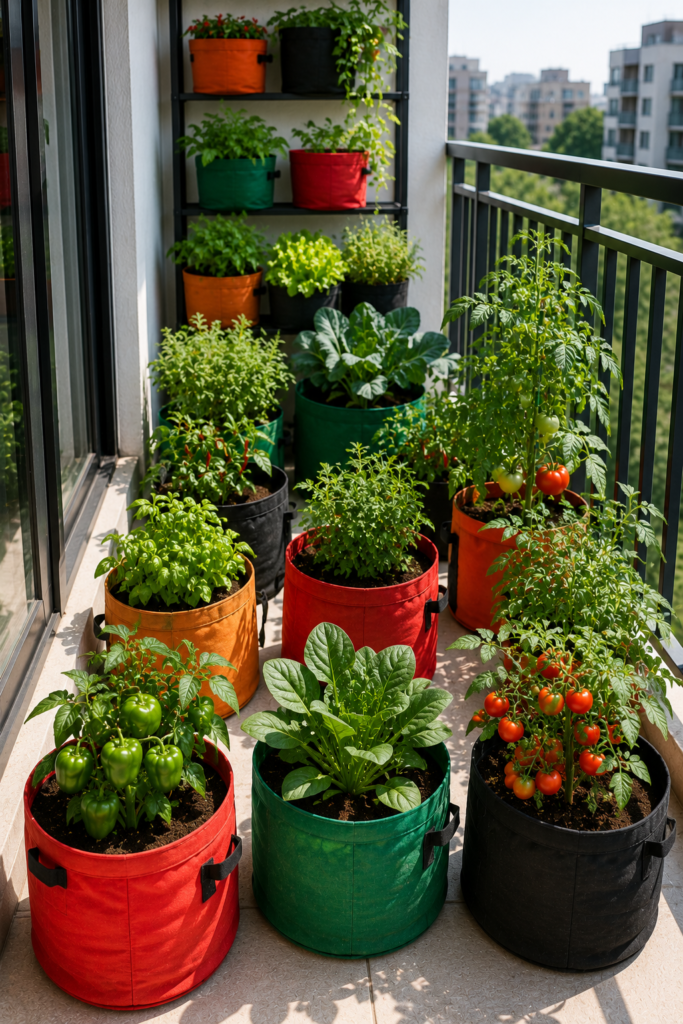
Grow bags are one of the easiest ways to start a balcony vegetable garden. Unlike traditional plastic pots, fabric grow bags allow better airflow around the roots, preventing root circling and encouraging healthier plant growth. They are lightweight, affordable, and easy to move whenever your plants need more sunlight.
Another advantage is drainage. Fabric naturally releases excess water, reducing the risk of root rot that often occurs in containers without proper drainage. During hot weather, simply monitor the soil more frequently because grow bags dry slightly faster than plastic containers.
Most vegetables perform extremely well in grow bags. Tomatoes, peppers, cucumbers, eggplants, potatoes, carrots, spinach, and herbs all produce healthy harvests when grown in the correct bag size with nutrient-rich soil.
Best Grow Bag Sizes
3-Gallon Grow Bags
Ideal for herbs, lettuce, spinach, and small leafy vegetables.
5-Gallon Grow Bags
Perfect for peppers, bush beans, and compact tomato varieties.
10-Gallon Grow Bags
Suitable for potatoes, cucumbers, eggplants, and larger tomato plants.
Benefits of Grow Bags
- Better root aeration.
- Excellent drainage.
- Lightweight and portable.
- Easy to store after the season.
- Affordable for beginners.
6. Prepare the Perfect Soil Mix for Healthy Vegetables
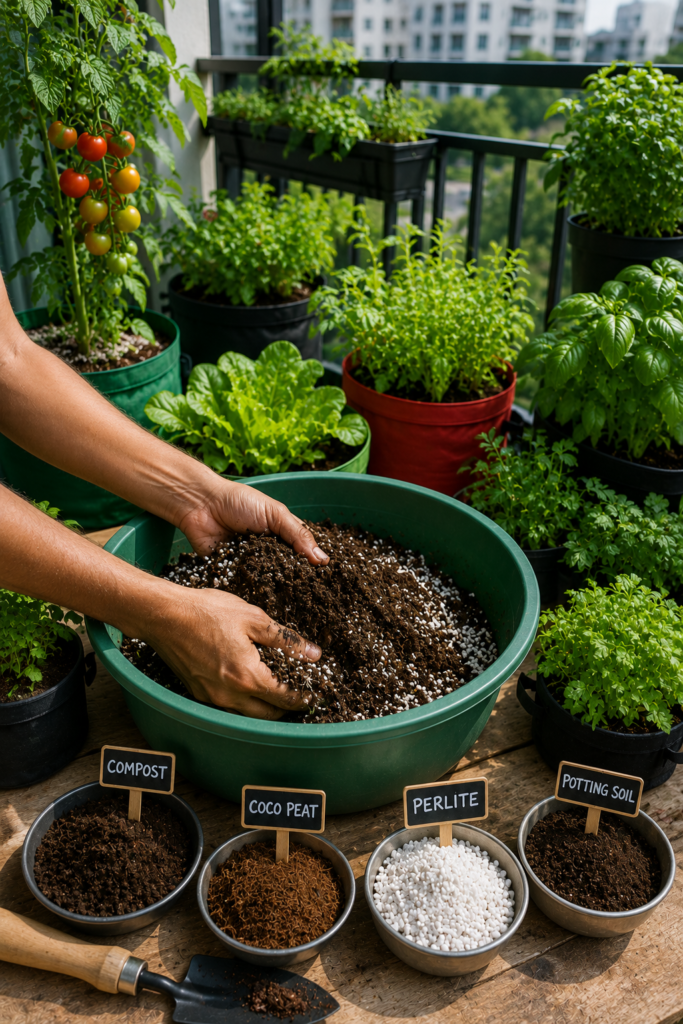
Healthy vegetables begin with healthy soil. Regular garden soil is usually too heavy for balcony containers because it compacts easily, holds excess water, and limits oxygen around plant roots. Instead, prepare a light, nutrient-rich potting mix that promotes strong root development.
A simple homemade mix consists of quality potting soil, compost, coco peat, and perlite. Compost provides nutrients, and coco peat improves moisture retention, while perlite increases drainage and airflow. Together, they create the ideal growing environment for container vegetables.
Refreshing the soil each growing season keeps plants productive. Add fresh compost every few months and remove old roots before planting new crops to maintain healthy soil structure.
Recommended Soil Mix
- 40% quality potting soil
- 30% compost
- 20% coco peat
- 10% perlite or coarse sand
Why Good Soil Matters
Better Drainage
Prevents waterlogging and root diseases.
Strong Root Growth
Allows vegetables to absorb nutrients efficiently.
Higher Yields
Healthy roots produce healthier vegetables.
Easier Maintenance
Balanced soil requires less frequent watering.
7. Water Your Balcony Garden the Right Way
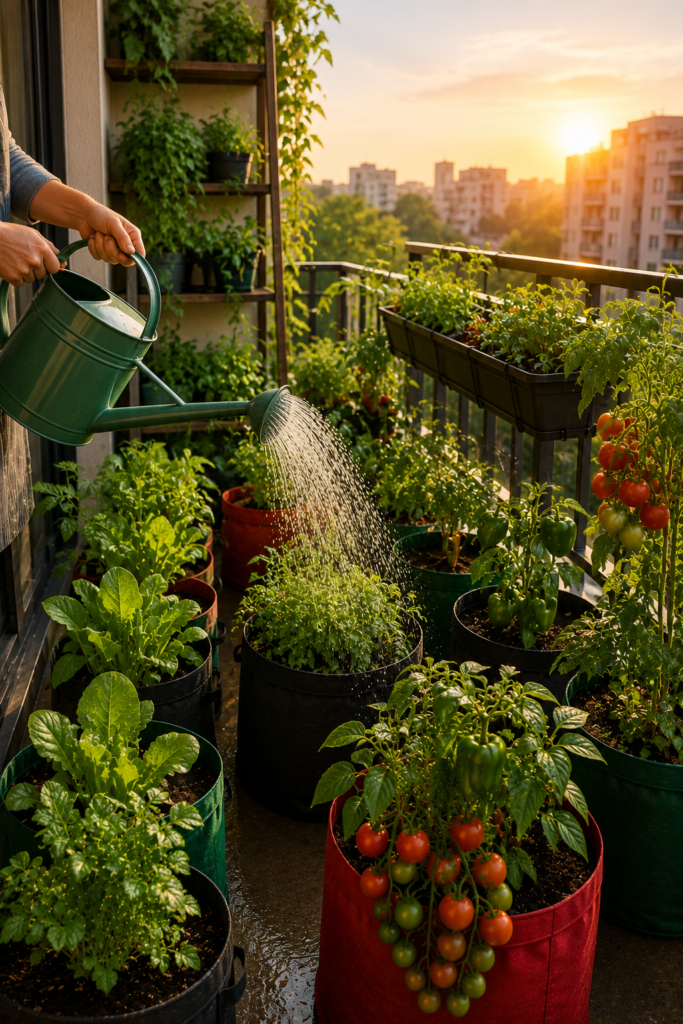
Proper watering is one of the biggest factors in successful balcony gardening. Too much water can suffocate roots, while too little causes vegetables to wilt, produce fewer fruits, and stop growing. Instead of following a strict schedule, check the soil before watering.
Insert your finger about one inch into the soil. If it feels dry, water deeply until excess moisture drains from the bottom of the container. Deep watering encourages stronger roots than frequent shallow watering.
Morning is usually the best time to water because plants absorb moisture before the heat of the day. During extremely hot weather, containers may require watering twice daily, especially hanging baskets and grow bags.
Watering Tips
Water Early
Morning watering reduces evaporation.
Avoid Wet Leaves
Direct water toward the soil to prevent fungal diseases.
Check Drainage
Never allow containers to sit in standing water.
Mulch the Surface
A thin layer of mulch helps retain moisture longer.
Signs of Incorrect Watering
- Yellow leaves
- Wilting despite wet soil
- Dry, cracked soil
- Slow growth
- Blossom drop on tomatoes and peppers
8. Plan Sunlight for Maximum Vegetable Production
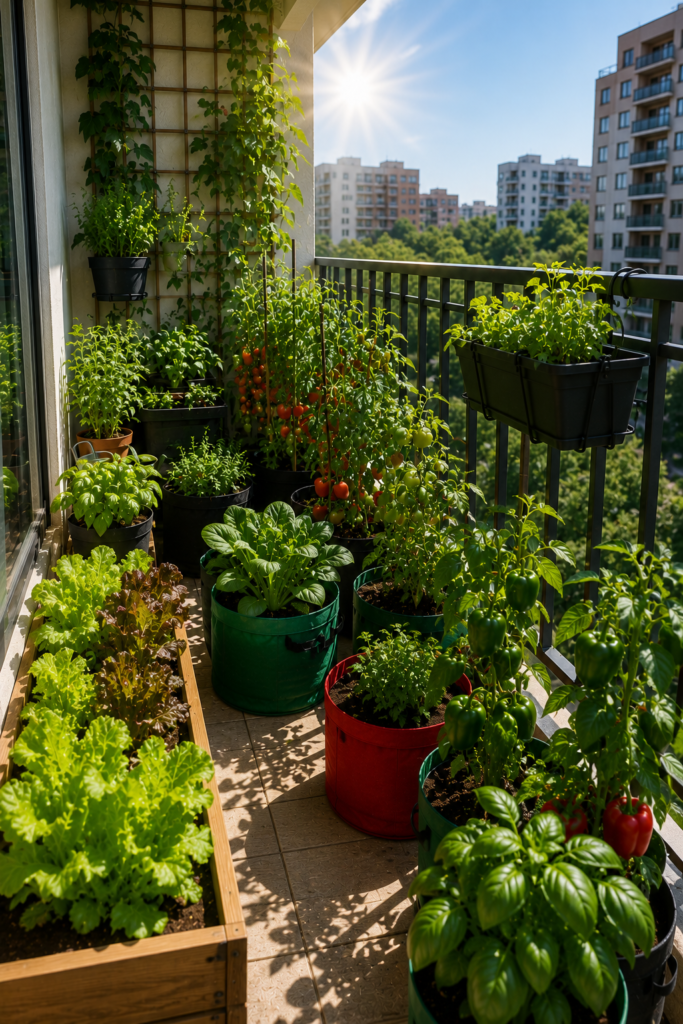
Sunlight determines how productive your balcony garden will become. Fruiting vegetables require plenty of direct sunlight to produce flowers and vegetables, while leafy greens often perform better with protection from intense afternoon heat.
Observe your balcony throughout the day to identify sunny and shaded areas. South-facing balconies generally receive the most sunlight, while east-facing balconies enjoy gentle morning sun that is excellent for many vegetables.
Rotating containers every week helps ensure all sides of the plants receive equal light. This prevents leaning stems and encourages balanced, healthy growth.
Sunlight Requirements
Full Sun (6–8 Hours)
- Tomatoes
- Peppers
- Eggplants
- Cucumbers
- Beans
Partial Sun (4–6 Hours)
- Spinach
- Lettuce
- Kale
- Swiss chard
- Coriander
Partial Shade
- Mint
- Parsley
- Cilantro
- Leafy herbs
Easy Ways to Improve Sunlight
- Rotate pots every week.
- Raise containers using plant stands.
- Prune overcrowded plants.
- Keep taller vegetables behind shorter ones.
- Clean balcony railings and glass panels to maximize available light.
9. Make Your Own Compost for Healthier Plants
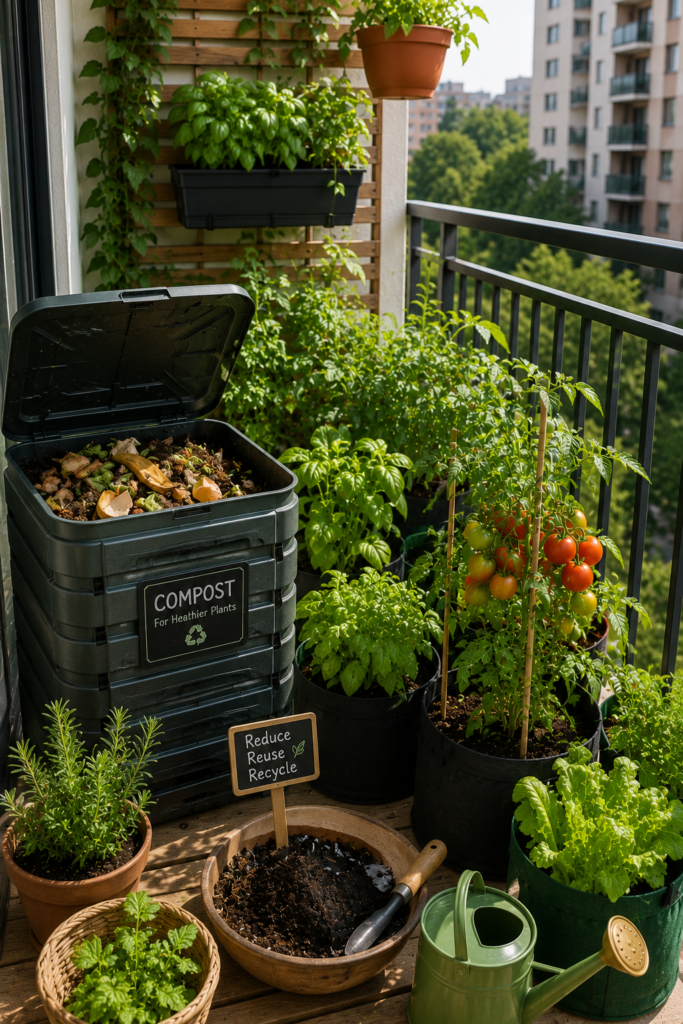
Homemade compost is one of the best natural fertilizers for a balcony vegetable garden. It enriches the soil with essential nutrients, improves moisture retention, and encourages beneficial microorganisms that help vegetables grow stronger. Instead of throwing away kitchen scraps, you can turn them into valuable plant food.
A small compost bin fits easily on most balconies. Fruit peels, vegetable scraps, coffee grounds, tea leaves, crushed eggshells, and dry leaves all break down into nutrient-rich compost over time. Avoid adding meat, dairy products, oily foods, or cooked leftovers, as they can create unpleasant odors and attract pests.
Mix finished compost into your containers every few weeks during the growing season. This provides a steady supply of nutrients without relying heavily on chemical fertilizers and helps vegetables produce healthier leaves, flowers, and fruits.
Compost Materials to Use
Green Materials
- Vegetable peels
- Fruit scraps
- Coffee grounds
- Fresh grass clippings
- Tea leaves
Brown Materials
- Dry leaves
- Cardboard pieces
- Shredded newspaper
- Coconut husks
- Small twigs
Benefits of Homemade Compost
- Improves soil fertility.
- Reduces household waste.
- Encourages healthy root growth.
- Helps retain soil moisture.
- Supports organic gardening.
10. Avoid Common Balcony Gardening Mistakes
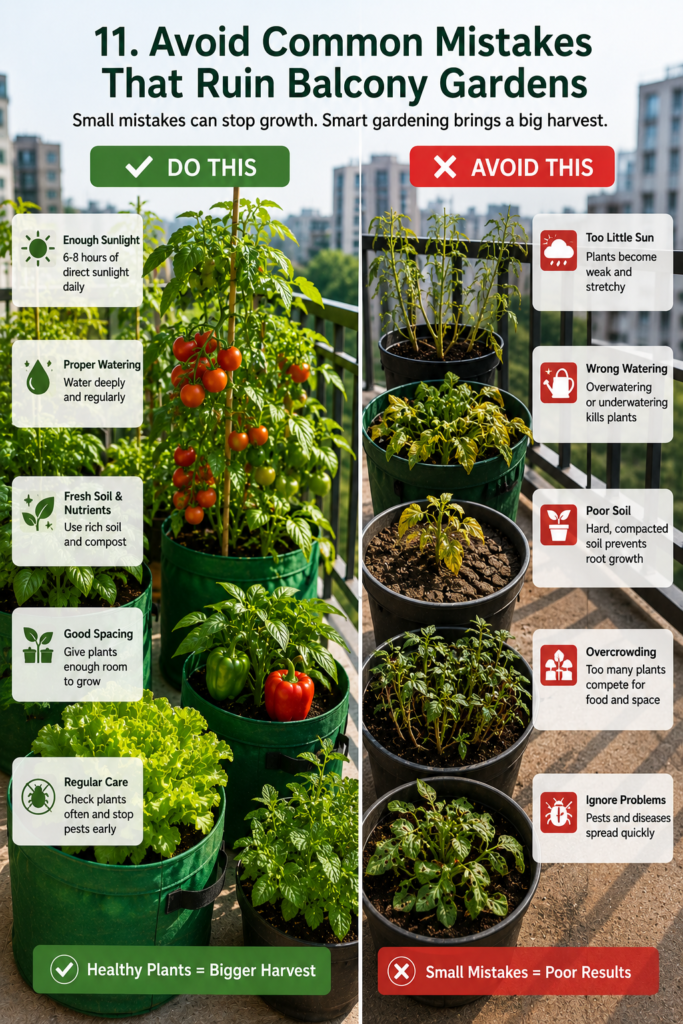
Many beginners lose plants because of simple mistakes that are easy to prevent. One of the biggest problems is overcrowding containers. When plants grow too close together, they compete for sunlight, water, nutrients, and airflow, reducing both growth and harvest.
Another common mistake is selecting containers that are too small. Deep-rooted vegetables such as tomatoes, peppers, carrots, and cucumbers require enough space for healthy root development. Without adequate room, plants become weak and produce fewer vegetables.
Ignoring sunlight requirements and watering inconsistently can also slow plant growth. Every vegetable has different needs, so observing your plants regularly helps you identify problems before they become serious.
Mistakes to Avoid
- Overwatering containers.
- Allowing water to collect under pots.
- Using poor-quality soil.
- Planting too many vegetables together.
- Forgetting to fertilize.
- Ignoring damaged leaves.
- Skipping regular harvesting.
- Using containers without drainage holes.
11. Control Garden Pests Naturally
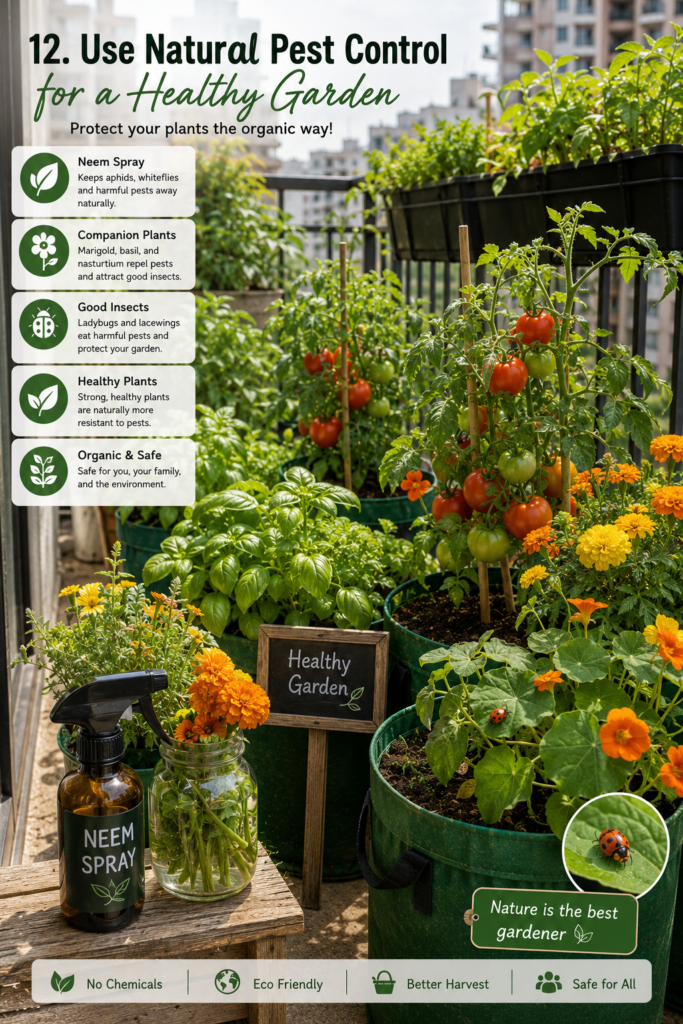
Healthy balcony gardens can still attract aphids, whiteflies, spider mites, and caterpillars. Fortunately, you can control most pests without harsh chemicals. Regular inspection is the easiest way to prevent serious infestations before they spread throughout your garden.
Neem oil spray is one of the safest organic solutions for container vegetables. Spraying plants every one to two weeks discourages many common insects while remaining safe when used correctly. Insecticidal soap and hand-picking larger pests are also effective methods for small gardens.
Companion planting provides another natural defense. Flowers like marigolds and herbs such as basil help repel certain insects while attracting beneficial pollinators that improve vegetable production.
Natural Pest Control Methods
Neem Oil Spray
Protects against many common insects.
Companion Plants
Grow basil, marigolds, and mint near vegetables.
Good Airflow
Proper spacing discourages fungal diseases.
Regular Inspection
Check both sides of the leaves every few days.
Signs of Pest Problems
- Holes in leaves.
- Sticky residue.
- Yellow spots.
- Curled foliage.
- Tiny insects beneath leaves.
12. Harvest Regularly and Maintain Your Garden
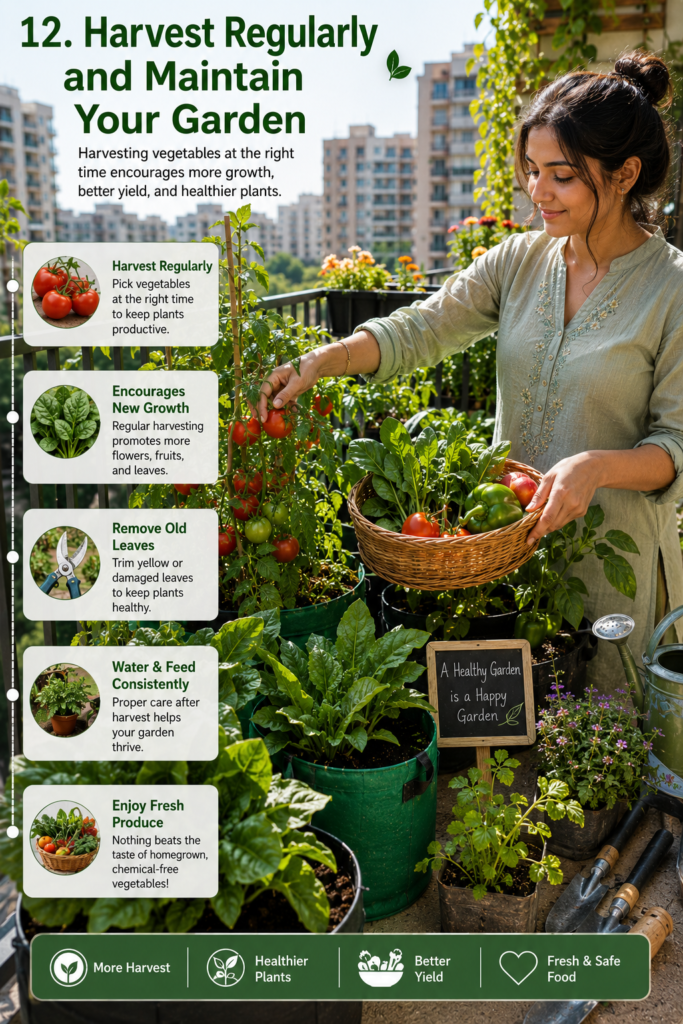
Harvesting vegetables at the right time encourages many plants to continue producing throughout the season. Leafy greens like lettuce and spinach grow best when you remove the outer leaves instead of harvesting the entire plant. This allows fresh leaves to continue developing.
Tomatoes, peppers, cucumbers, and beans should be picked as soon as they reach maturity. Leaving ripe vegetables on the plant too long often slows down future production because the plant focuses on ripening existing fruit instead of producing new flowers.
Regular maintenance keeps your garden healthy. Remove yellow leaves, trim damaged stems, replenish mulch, add compost when needed, and clean containers between growing seasons to reduce disease problems.
Weekly Maintenance Checklist
- Water consistently.
- Remove weeds immediately.
- Harvest ripe vegetables.
- Inspect leaves for pests.
- Feed plants monthly with compost.
- Rotate containers if necessary.
- Clean fallen leaves.
- Tie climbing plants to supports.
Best Vegetables for Balcony Gardening
| Vegetable | Sunlight | Container Size | Difficulty |
| Tomatoes | Full Sun | Large (5–10 Gallons) | Medium |
| Peppers | Full Sun | Medium | Easy |
| Spinach | Partial Sun | Shallow | Easy |
| Lettuce | Partial Sun | Shallow | Very Easy |
| Radishes | Full Sun | Deep | Easy |
| Carrots | Full Sun | Deep | Medium |
| Green Beans | Full Sun | Medium | Easy |
| Cucumbers | Full Sun | Large + Trellis | Medium |
| Mint | Partial Shade | Small | Very Easy |
| Basil | Full Sun | Small | Very Easy |
| Coriander | Partial Sun | Small | Easy |
| Kale | Partial Sun | Medium | Easy |
Expert Tips for a Thriving Balcony Vegetable Garden
Successful balcony gardening isn’t about having the biggest space—it’s about making smart choices. Choose vegetables that naturally grow well in containers, rotate crops each season, and avoid planting too many heavy feeders together. Healthy soil, proper watering, and regular observation will solve most gardening problems before they become serious.
Adding companion flowers, using mulch to reduce water loss, and harvesting vegetables regularly will keep your plants productive for longer. Even a tiny balcony can provide fresh produce throughout much of the year with consistent care.
Frequently Asked Questions
What are the easiest vegetables to grow on a balcony?
Spinach, lettuce, basil, mint, coriander, radishes, and peppers are excellent choices for beginners because they grow well in containers and require minimal maintenance.
How much sunlight do balcony vegetables need?
Most fruiting vegetables need at least 6–8 hours of direct sunlight each day. Leafy greens and herbs can often grow successfully with 4–6 hours of sunlight.
Can I grow vegetables on a shaded balcony?
Yes. Vegetables like lettuce, spinach, kale, mint, parsley, and coriander tolerate partial shade much better than tomatoes or peppers.
Which containers are best for balcony vegetable gardening?
Grow bags, clay pots, wooden planters, and high-quality plastic containers with drainage holes are all excellent choices depending on the vegetables you’re growing.
How often should I fertilize container vegetables?
Feed your plants every 2–4 weeks using compost, worm castings, or a balanced organic fertilizer during the growing season.
How can I keep pests away naturally?
Inspect plants regularly, use neem oil spray when necessary, encourage beneficial insects, grow companion plants, and remove damaged leaves promptly.
Can I grow vegetables year-round on a balcony?
In many climates, yes. Seasonal vegetables can be rotated throughout the year, allowing continuous harvests with proper planning and care.
Conclusion
Creating a productive balcony vegetable garden is easier than many people think. By choosing suitable containers, using nutrient-rich soil, maximizing vertical space, and providing the right balance of sunlight and water, even the smallest balcony can become a thriving source of fresh vegetables. Smart planning allows you to grow more food while keeping your outdoor space organized, beautiful, and easy to maintain.
These 12 balcony vegetable garden ideas prove that limited space doesn’t have to limit your harvest. Whether you’re growing herbs in hanging baskets, tomatoes in grow bags, or leafy greens on vertical shelves, every container brings you one step closer to a healthier and more sustainable lifestyle. Start with a few easy vegetables, care for them consistently, and you’ll soon enjoy fresh, homegrown produce right outside your door.