

8 Japandi Style Bedroom Design Ideas for a Calm, Cozy, and Timeless Retreat
If your bedroom feels cluttered, overwhelming, or simply lacks warmth, Japandi design may be exactly what you need. Combining the clean simplicity of Japanese interiors with the comfort-focused approach of Scandinavian design, Japandi creates a bedroom that feels both relaxing and practical.
One of the reasons I love Japandi bedrooms is that they never chase trends. Instead, they focus on natural materials, thoughtful furniture choices, calming colors, and purposeful décor. The result is a space that feels peaceful every day of the year.
These Japandi-style bedroom design ideas can help transform any bedroom into a sanctuary where relaxation comes naturally. Whether you’re redesigning your entire room or making a few simple updates, these ideas will help you achieve a balanced and timeless aesthetic.
1. Neutral Color Palettes Combined with Natural Wood Elements
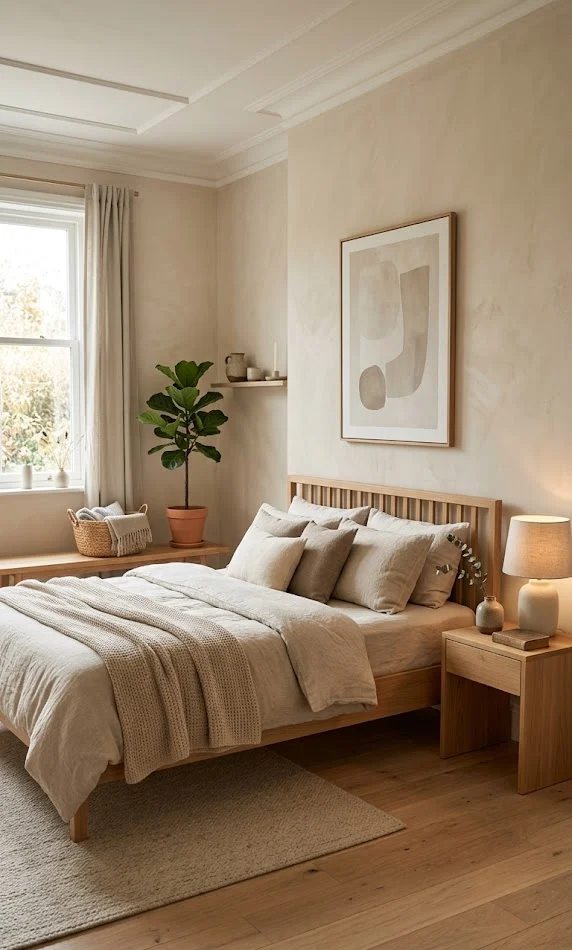
The foundation of every successful Japandi bedroom begins with color. Instead of bright, attention-grabbing shades, this style embraces a soothing palette inspired by nature.
Soft whites, warm beige, taupe, greige, muted clay, stone gray, and earthy greens create a calming backdrop that immediately makes a room feel more inviting. These colors help reduce visual noise while encouraging relaxation and better rest.
Natural wood plays an equally important role. Oak, walnut, ash, and beech wood introduce warmth that prevents the room from feeling cold or sterile. The contrast between soft neutral walls and organic wood grain creates depth without overwhelming the space.
Best Colors for a Japandi Bedroom
| Color | Effect |
| Warm White | Bright and airy |
| Taupe | Soft and sophisticated |
| Sand Beige | Warm and relaxing |
| Clay Brown | Earthy and grounding |
| Sage Green | Fresh and calming |
| Charcoal Gray | Adds subtle contrast |
A simple wooden platform bed paired with neutral bedding instantly creates the signature Japandi atmosphere.
2. Choose Low-Profile Furniture for a Grounded Look
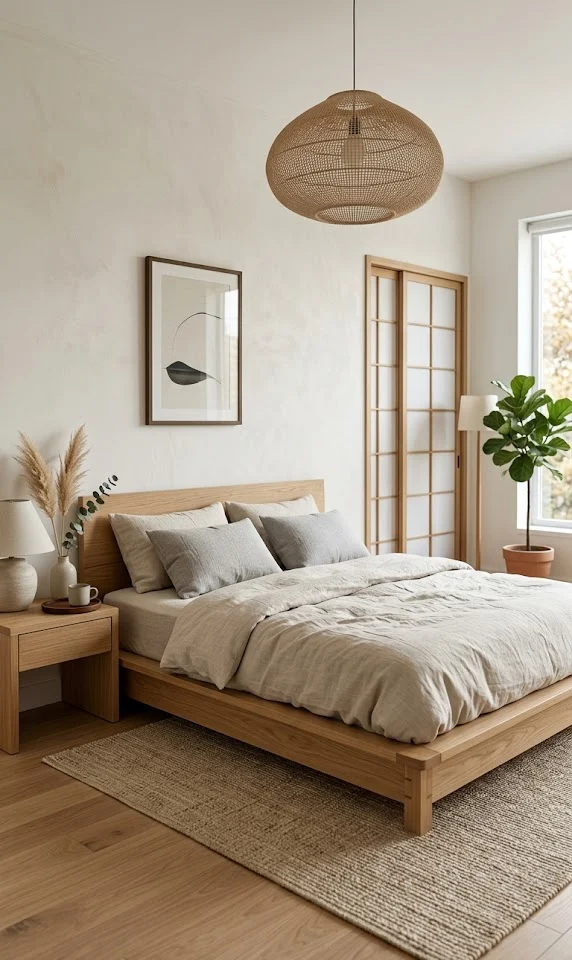
Furniture selection can completely change how a bedroom feels.
Japandi design favors low-profile furniture because it creates a stronger connection with the room while making ceilings appear higher. Inspired by traditional Japanese interiors, these lower furniture pieces help create an open and balanced environment.
The bed should become the focal point without dominating the room. A simple wooden platform bed with clean lines often works best. Avoid bulky headboards, excessive ornamentation, and oversized furniture that interrupts visual flow.
Nightstands should be practical rather than decorative. Floating shelves or compact wooden tables help maintain the minimalist appearance while still providing everyday functionality.
Key Furniture Characteristics
- Low-profile bed frames
- Clean straight lines
- Natural wood finishes
- Hidden storage solutions
- Minimal decorative details
- Functional design with purpose
The beauty of Japandi furniture lies in its simplicity. Every piece should serve a purpose while contributing to the room’s overall sense of calm.
3. Layer Natural Textures for Warmth and Comfort
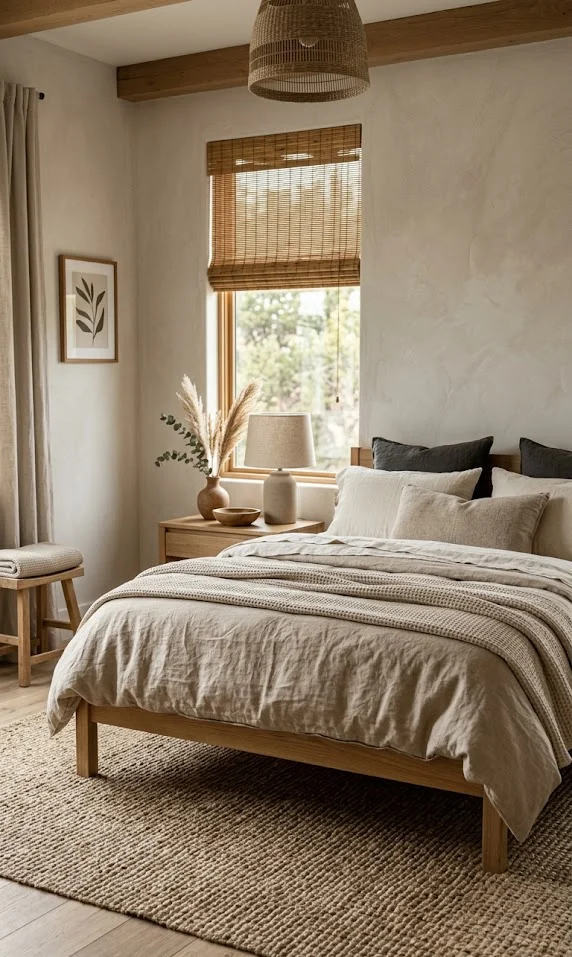
Minimalism doesn’t have to feel cold. One of the secrets behind successful Japandi interiors is the thoughtful layering of natural textures.
Rather than relying on colorful patterns, Japandi bedrooms create visual interest through materials. Linen bedding, woven rugs, cotton throws, bamboo shades, and handcrafted textiles work together to create depth and warmth.
Layering textures also enhances comfort. A bedroom should feel inviting the moment you walk into it, and natural fabrics help achieve that welcoming atmosphere.
Linen remains one of the most popular materials because it becomes softer over time while maintaining its relaxed appearance. Organic cotton and hemp are also excellent choices due to their durability and breathable qualities.
Recommended Texture Combinations
| Element | Recommended Material |
| Bedding | Linen or Organic Cotton |
| Throw Blanket | Wool or Bamboo Blend |
| Rug | Jute or Hemp |
| Curtains | Linen Blend |
| Accent Pillows | Boucle or Linen |
When layering textures, focus on quality over quantity. A few carefully selected materials often create a more luxurious appearance than filling the room with unnecessary accessories.
The goal is to create a bedroom that feels warm, comfortable, and effortlessly elegant while maintaining the simplicity that defines Japandi design.
4. Incorporate Nature Through Simple Organic Decor
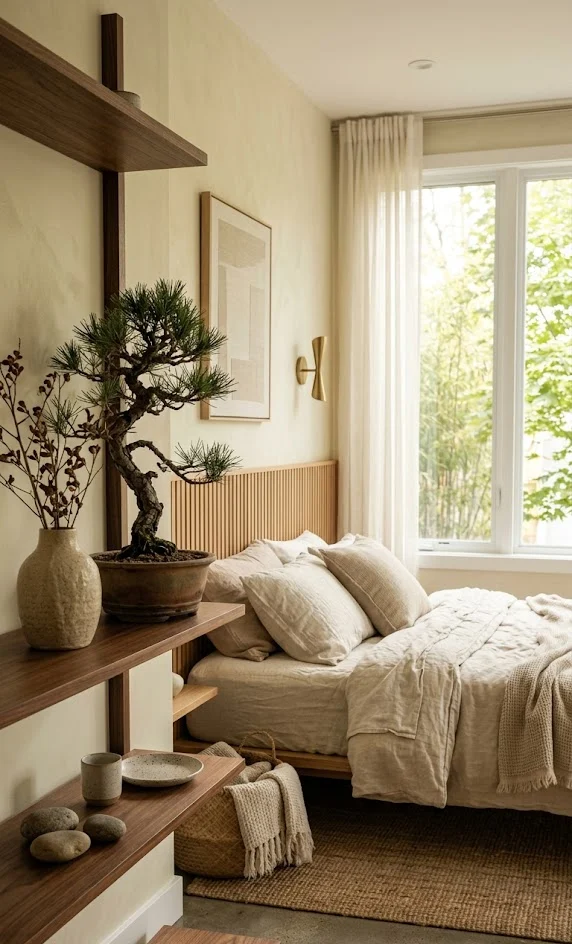
Nature is at the heart of Japandi design. Instead of filling the room with excessive decorations, focus on a few carefully selected organic elements. A small bonsai tree, a handcrafted ceramic vase, or a branch arrangement can instantly introduce tranquility.
Natural décor creates a stronger connection to the outdoors while maintaining the clean aesthetic that defines Japandi interiors. Choose pieces with organic shapes, earthy tones, and handcrafted imperfections that celebrate the beauty of simplicity.
5. Use Soft Layered Lighting for a Relaxing Atmosphere
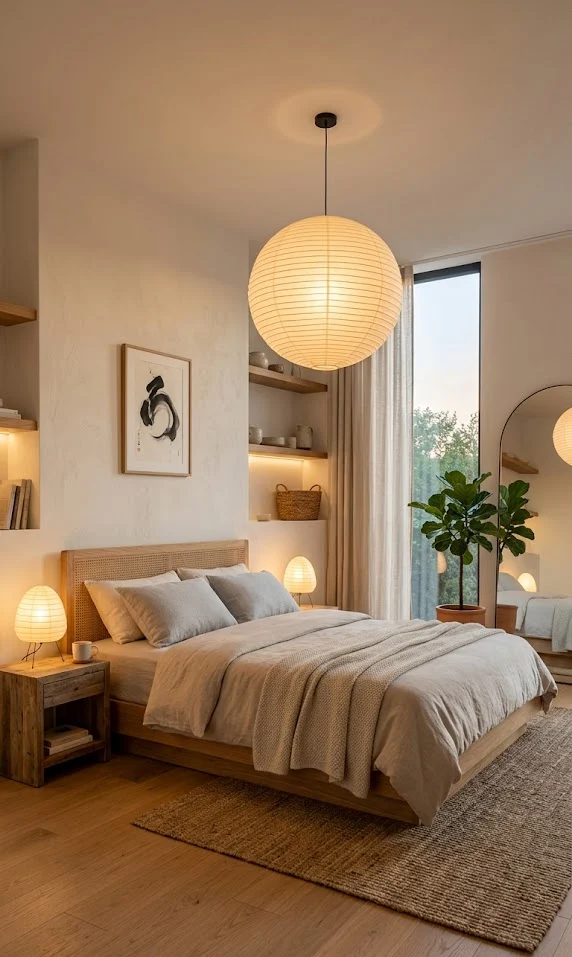
Lighting influences mood more than almost any other design element. Japandi bedrooms rely on soft, warm lighting instead of harsh overhead fixtures.
Combine multiple light sources such as table lamps, floor lamps, paper lanterns, and concealed LED lighting. Warm bulbs between 2700K and 3000K help create a cozy environment that encourages relaxation and better sleep.
6 Japandi Storage Solutions for Small Bedrooms
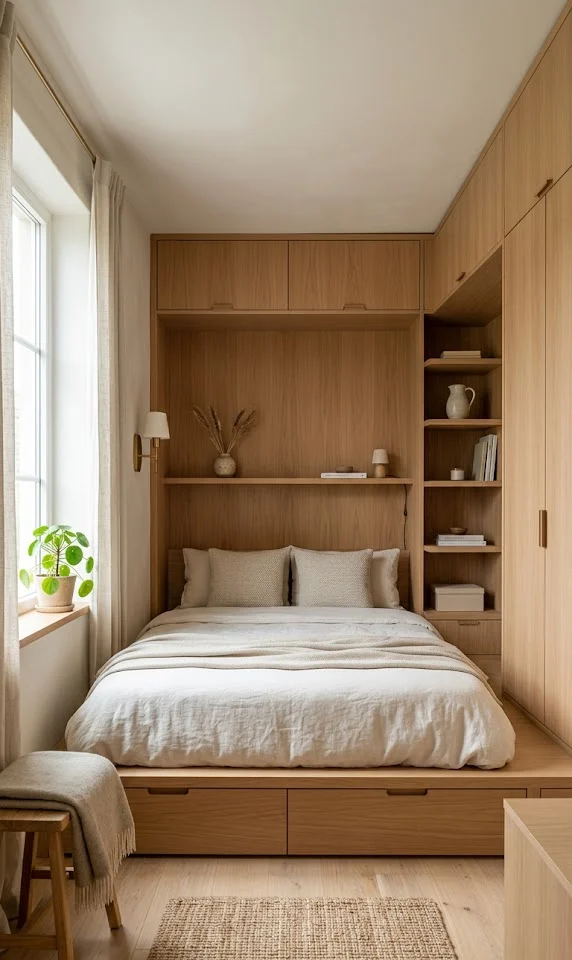
Small bedrooms benefit greatly from Japandi principles. Floating shelves, under-bench storage, concealed cabinets, and multifunctional furniture help maximize space while preserving visual calm.
7 Best Bedding Choices for Japandi Bedrooms
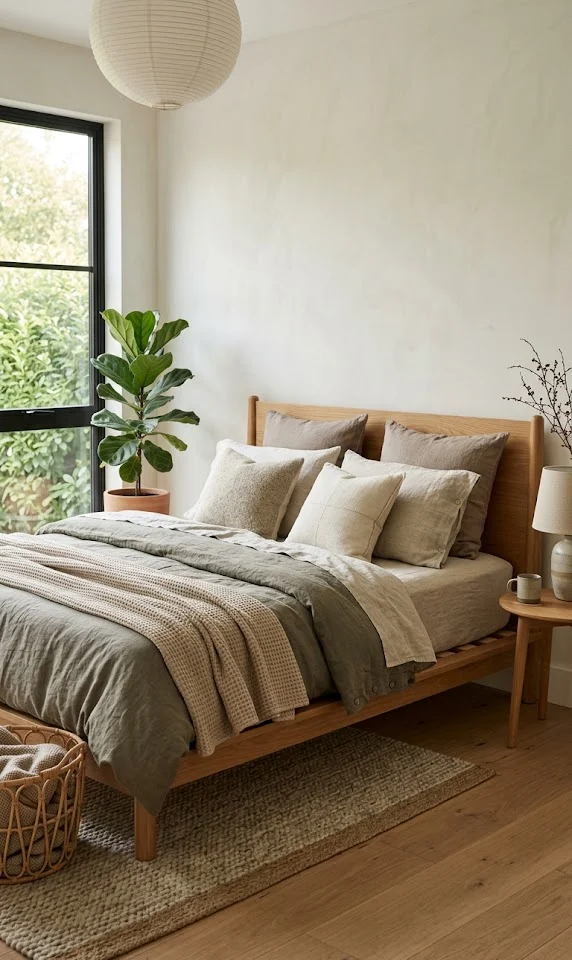
Choose breathable fabrics such as linen, organic cotton, hemp, and bamboo blends. Neutral-colored bedding in beige, ivory, taupe, and soft gray helps maintain a cohesive appearance while enhancing comfort.
8 Creating a Wabi-Sabi Corner in Your Bedroom
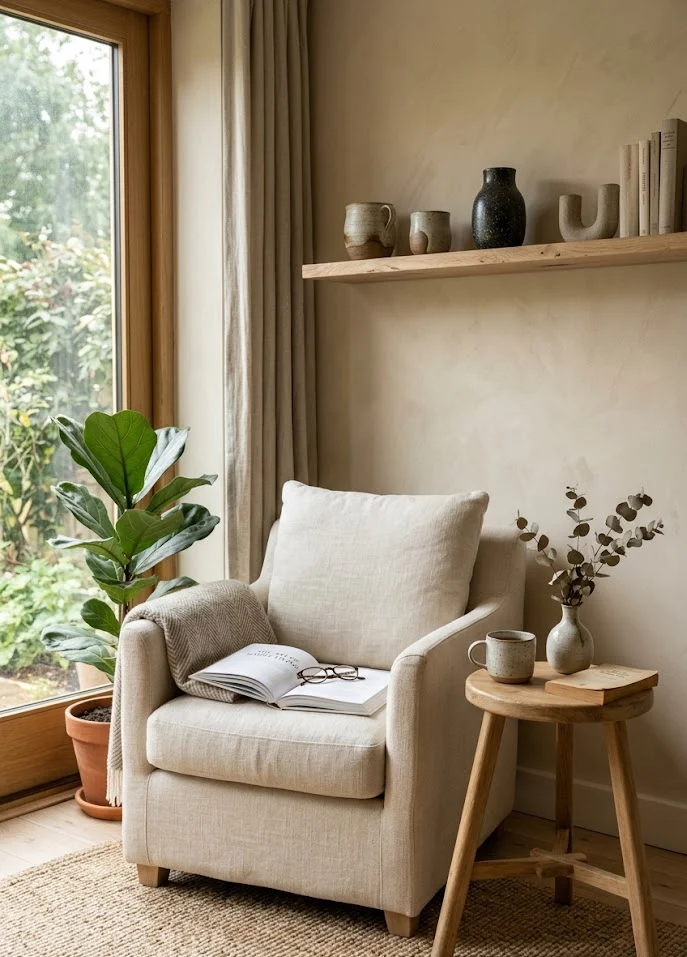
Wabi-sabi embraces beauty in imperfection. Create a peaceful corner using a handmade ceramic vase, wooden stool, textured cushion, and a small plant. This simple arrangement adds character while supporting the calming philosophy behind Japandi living.
Common Japandi Mistakes to Avoid
- Overdecorating the room.
- Using glossy synthetic materials.
- Choosing bright neon colors.
- Installing cool blue lighting.
- Mixing too many unrelated design styles.
- Purchasing oversized furniture.
- Ignoring natural textures.
Where to Shop Japandi Furniture & Decor
Recommended stores:
- IKEA
- MUJI
- Zara Home
- H&M Home
- Etsy
- Amazon
- Local artisan furniture shops
Conclusion
Japandi design offers a timeless approach to bedroom decorating by blending Scandinavian comfort with Japanese simplicity. Through natural materials, neutral colors, low-profile furniture, layered textures, organic décor, and soft lighting, you can create a space that feels both elegant and restorative. These japandi style bedroom design ideas provide a practical roadmap for transforming your bedroom into a peaceful retreat that supports relaxation every day.
FAQs
What is the main principle of Japandi design?
Balance between simplicity, functionality, and warmth.
Are Japandi bedrooms suitable for small spaces?
Yes. The minimalist approach helps small rooms feel larger and more organized.
What colors work best?
Warm whites, beige, taupe, sage green, charcoal gray, and earthy browns.
Is Japandi expensive to achieve?
Not necessarily. Many affordable retailers offer furniture and décor that fit the aesthetic.
Can I mix Japandi with modern design?
Yes. Modern elements with clean lines and natural materials blend well with Japandi interiors.