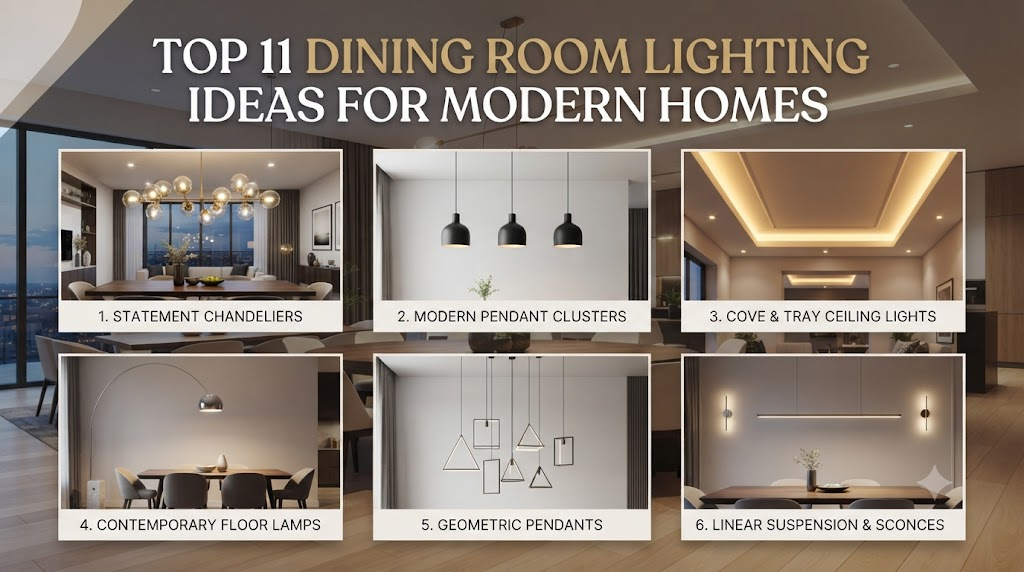
Top 11 Dining Room Lighting Ideas for Modern Homes
Dining room lighting is one of the most powerful design elements in any home, yet it is often planned as an afterthought. The right lighting doesn’t just brighten the space—it shapes mood, defines style, and influences how comfortable your dining area feels during everyday meals and special gatherings.
A well-designed lighting plan balances function and atmosphere. From statement chandeliers to subtle accent lights, every layer plays a role in creating warmth, depth, and visual harmony. In this guide, you’ll discover practical and stylish dining room lighting ideas that elevate both modern and traditional interiors.
1. Statement Chandelier as a Focal Point
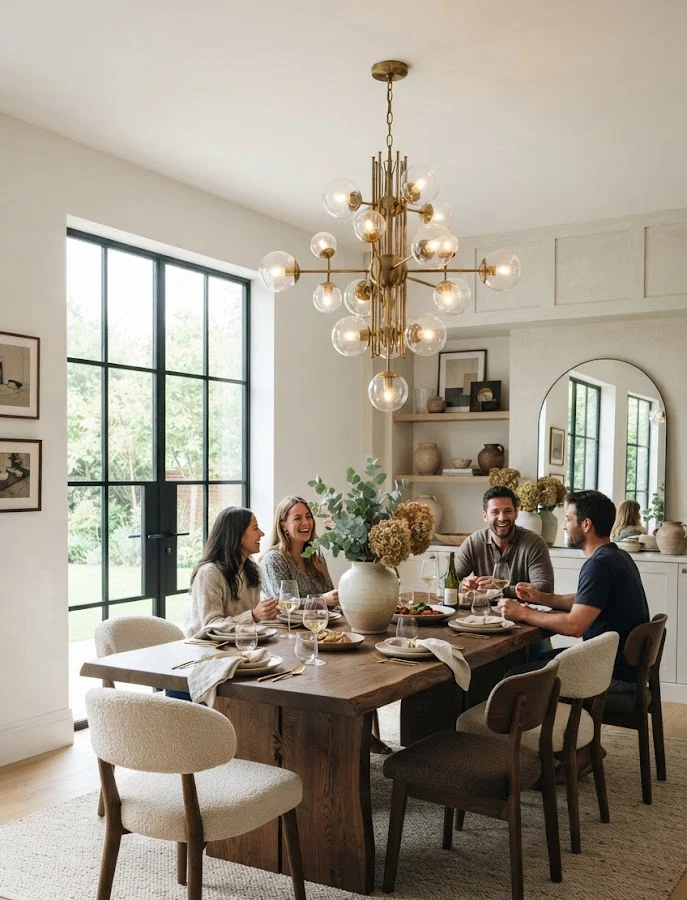
A statement chandelier instantly becomes the centerpiece of a dining room. It draws attention above the table and sets the tone for the entire space, whether modern, classic, or luxury-inspired.
The key is proportion. A chandelier that is too large can overwhelm the room, while a small one may feel lost. The ideal fixture should visually match the size of your dining table and ceiling height.
Warm lighting enhances its impact, making the space feel inviting for dinners, celebrations, and family gatherings.
2. Pendant Lighting for Clean Modern Style
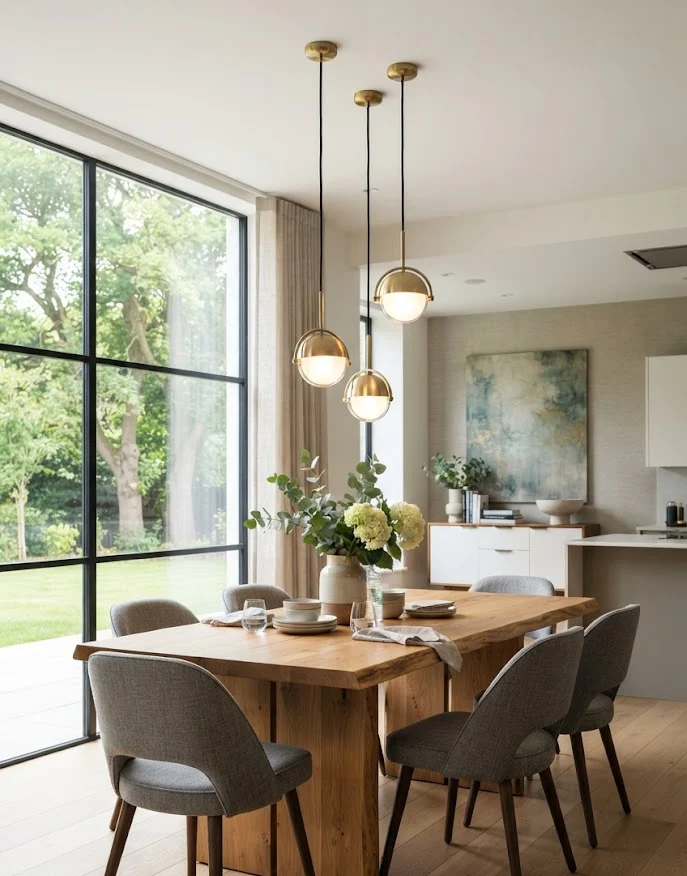
Pendant lights are perfect for modern dining rooms that prioritize simplicity and structure. They work especially well over rectangular or round tables.
You can use a single oversized pendant or multiple smaller ones depending on the table size. Even spacing is essential to maintain balance and visual harmony.
This style adds a contemporary touch while keeping the space open, uncluttered, and functional.
3. Linear Suspension Lighting for Long Tables
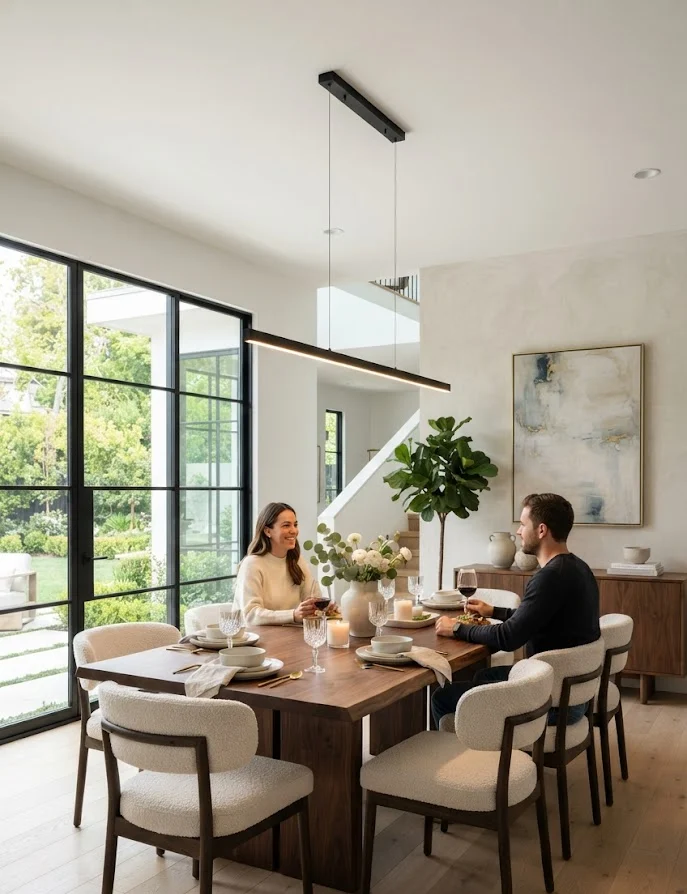
Linear suspension lighting is ideal for long dining tables. It provides even illumination across the entire surface, ensuring no dark or overly bright areas.
This design aligns perfectly with rectangular tables, creating a strong visual structure and modern aesthetic.
It is especially popular in open-concept homes where defining the dining zone is important without using walls.
4. Layered Lighting for Depth and Balance
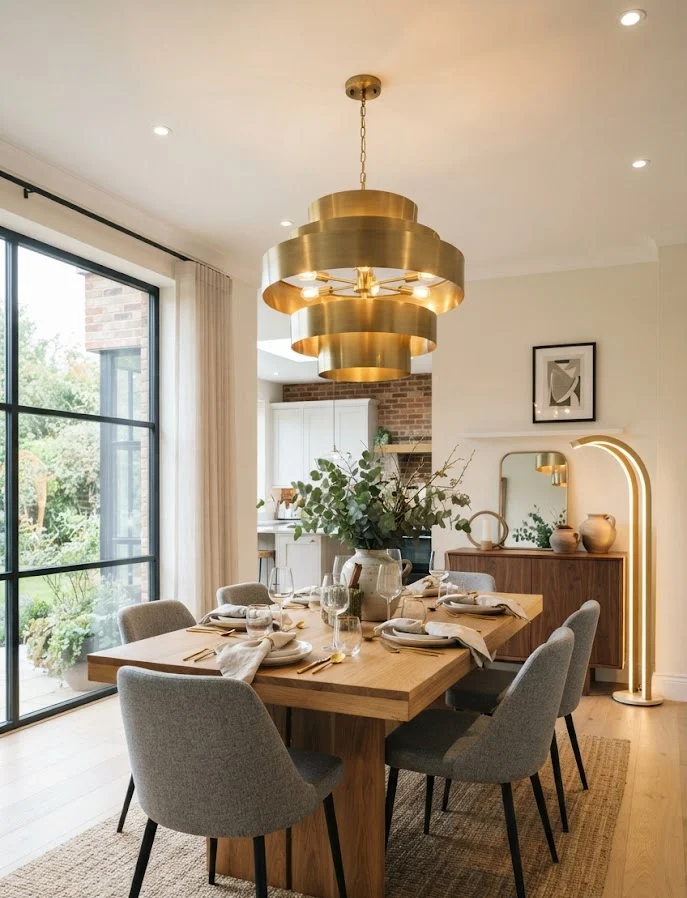
Layered lighting combines multiple light sources such as overhead fixtures, wall lights, and accent lighting. This creates depth and flexibility in the dining space.
It allows you to adjust the mood depending on the occasion. Bright lighting works for daily meals, while softer layers create intimacy for evening dinners.
A well-layered setup prevents harsh shadows and gives the dining room a polished, professionally designed feel.
5. Wall Sconces for Soft Ambient Glow
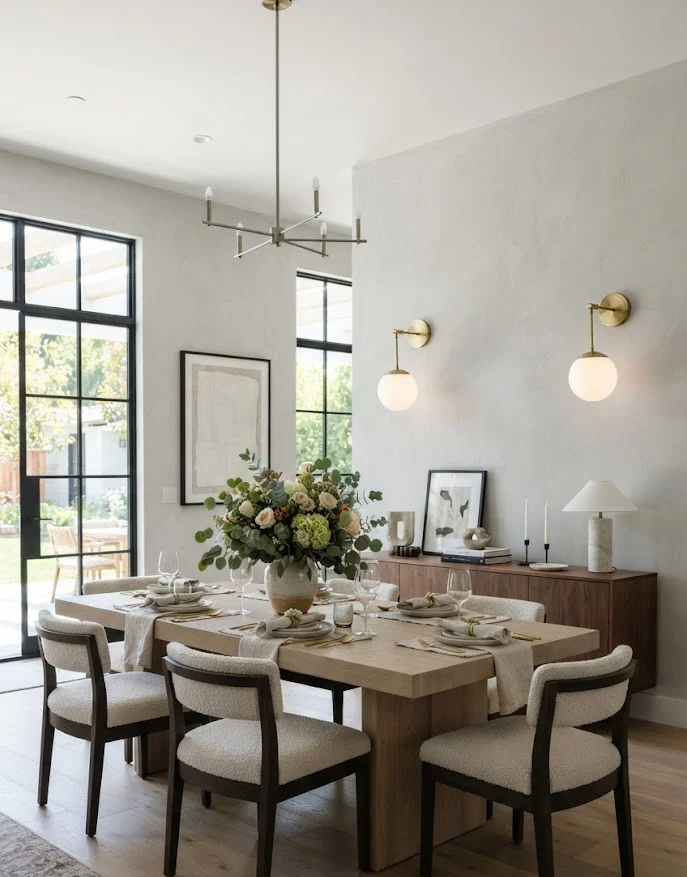
Wall sconces add subtle lighting that enhances the room without overpowering it. They soften harsh overhead light and create a cozy atmosphere.
They are often placed on side walls or near artwork to add visual interest and depth.
This lighting style works well in formal dining rooms where ambiance is more important than brightness.
6. Recessed Lighting for Minimalist Design
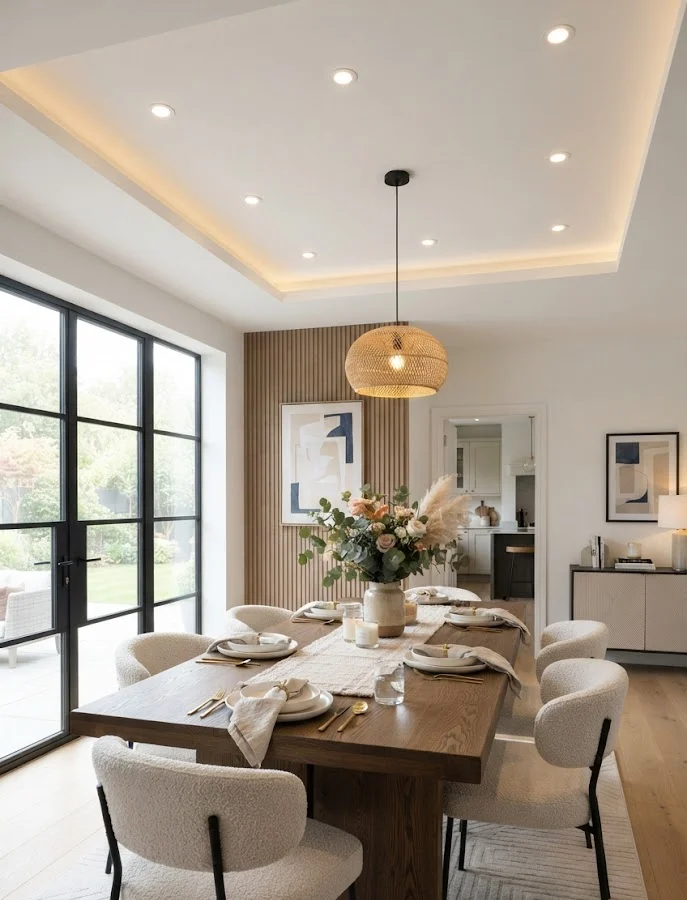
Recessed lighting provides a clean and modern look by blending directly into the ceiling. It is ideal for minimalist interiors where simplicity is key.
Instead of acting as a focal point, recessed lights support the overall lighting plan by filling in shadows and ensuring even brightness.
When spaced correctly, they create a balanced environment without visual clutter.
7. Dimmer-Controlled Lighting for Flexibility
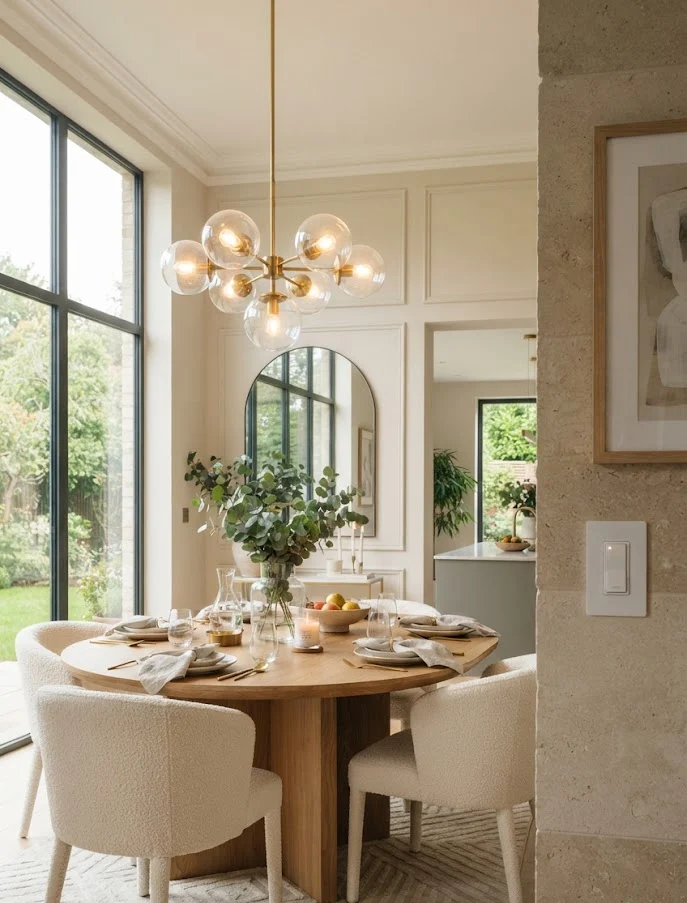
Dimmer switches allow complete control over brightness levels, making your dining room adaptable for any occasion.
You can switch from bright lighting for meals to soft, warm lighting for relaxing dinners or gatherings.
This simple upgrade improves comfort, saves energy, and enhances the versatility of your entire lighting system.
8. Candle-Style Fixtures for Classic Elegance
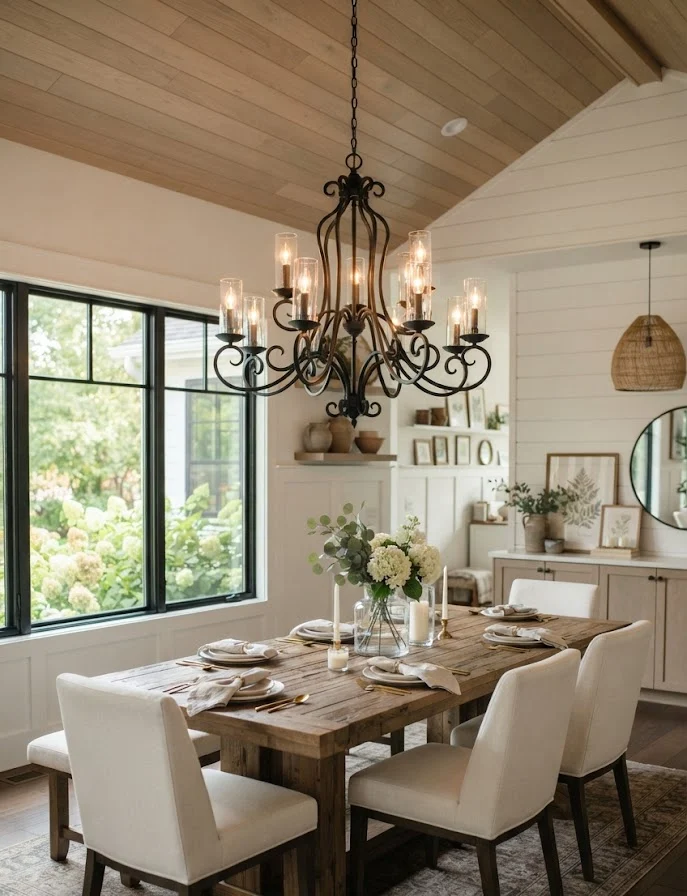
Candle-style lighting brings timeless charm into dining spaces. It works especially well in traditional, farmhouse, or transitional interiors.
These fixtures mimic the warm glow of candles, creating a soft and inviting atmosphere.
When paired with modern LED bulbs, they offer both style and efficiency without losing their classic appeal.
9. Industrial Dining Room Lighting for Bold Style
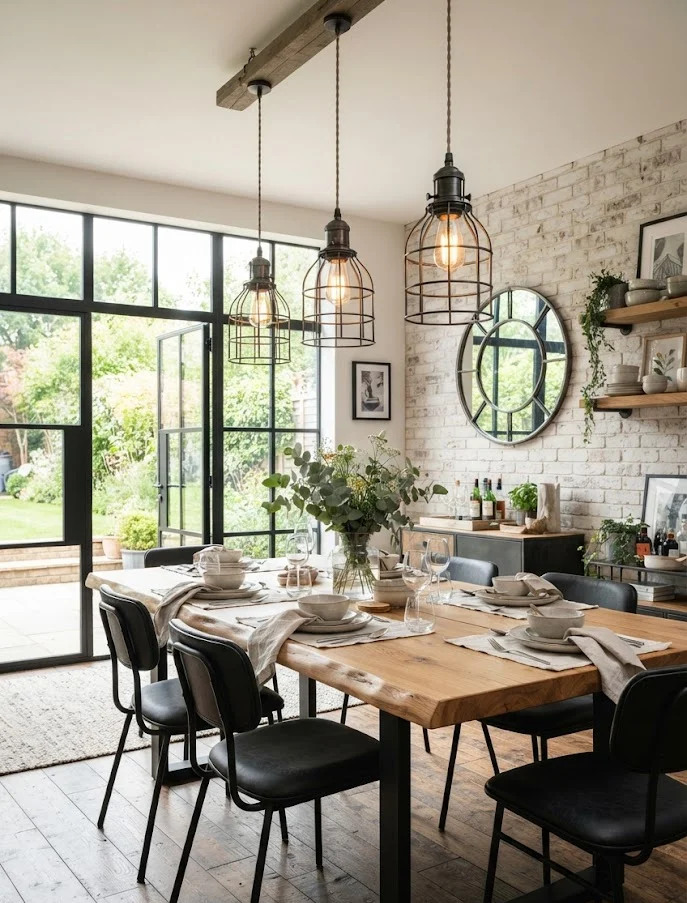
Industrial lighting uses metal finishes, exposed bulbs, and raw textures to create a bold and edgy look.
It works well in modern lofts, urban homes, or spaces with neutral décor that need visual contrast.
To avoid a harsh feel, it is often paired with warm light bulbs and wooden furniture for balance.
10. Nature-Inspired Lighting for Organic Warmth
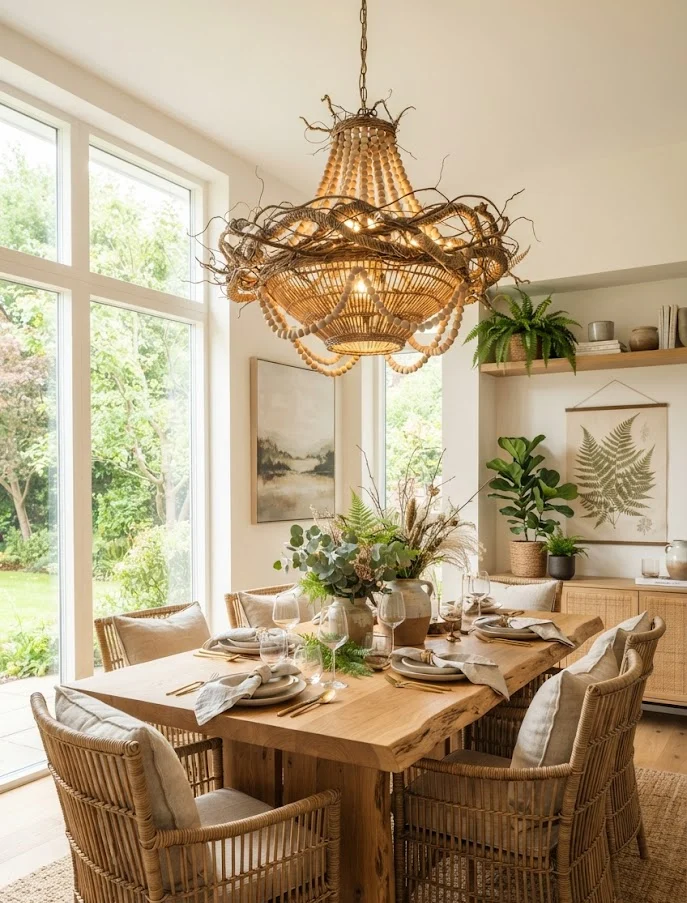
Nature-inspired lighting uses materials like wood, bamboo, rattan, and linen to create a soft and organic atmosphere.
These fixtures bring warmth and calmness, making dining spaces feel more relaxed and welcoming.
They pair beautifully with neutral palettes, indoor plants, and natural textures.
11. LED Strip and Accent Lighting for Modern Depth
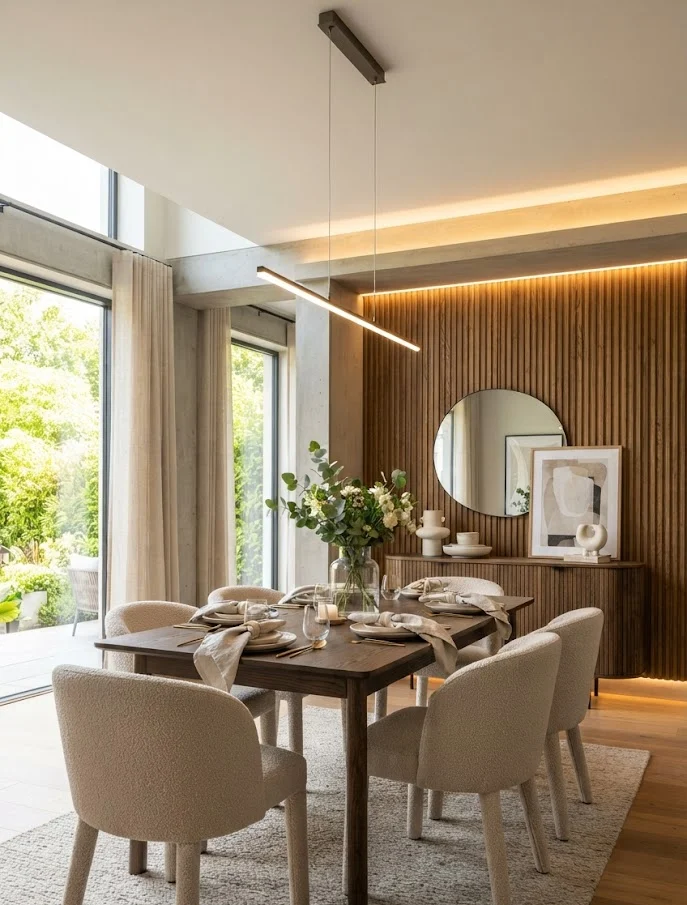
LED strip lighting adds subtle enhancement by highlighting architectural features such as ceilings, cabinets, or wall panels.
It is not meant to be the main light source but works as an accent layer that adds depth and modern appeal.
When used correctly, it makes the dining room feel more dynamic, stylish, and visually layered.
How to Layer Dining Room Lighting Effectively
A strong lighting design always includes three layers: ambient, task, and accent lighting. Each layer plays a specific role in creating balance and usability.
The main overhead fixture provides general illumination, while wall lights and LEDs fill in softer tones. Accent lighting highlights décor or architectural details.
This combination ensures the dining room feels comfortable at all times of the day, whether for casual meals or formal entertaining.
FAQs
1. What is the best lighting for a dining room?
A mix of overhead lighting, such as chandeliers or pendants, combined with ambient and accent lighting works best for both style and function.
2. How high should dining room lights be installed?
Most dining lights should hang around 30–36 inches above the table for proper visibility and balanced design.
3. Can I mix different lighting styles in one dining room?
Yes, mixing styles works well if they share similar finishes, colors, or design themes for visual harmony.
4. Are dimmers important for dining room lighting?
Yes, dimmers are highly recommended because they allow you to control mood, brightness, and energy use easily.
5. What lighting color is best for dining rooms?
Warm white lighting (2700K–3000K) is ideal as it creates a cozy, inviting, and comfortable dining atmosphere.
Conclusion
Dining room lighting is more than just a functional necessity—it is a key design element that defines mood, comfort, and style. A well-planned lighting setup transforms the dining area into a warm and inviting space for everyday use and special occasions.
From statement chandeliers to layered lighting systems, each idea contributes to a balanced and visually appealing environment. The right combination enhances both practicality and aesthetics without overwhelming the space.
By carefully selecting fixtures, adjusting brightness, and layering different light sources, you can create a dining room that feels elegant, functional, and perfectly suited to your lifestyle.